Friday, October 06, 2006

Jesus Died So I Might Tell You How to Live

[Note: This post has attracted a surprising amount of interest, which caused me to reread it and discover, to my chagrin, that it was full of typos and grammatical errors. This is a slightly revised and edited version, reposted on 10/18/06.]

Evangelicals Fear the Loss of Their Teenagers is a story in today's New York Times.

Despite their packed megachurches, their political clout and their increasing visibility on the national stage, evangelical Christian leaders are warning one another that their teenagers are abandoning the faith in droves.

At an unusual series of leadership meetings in 44 cities this fall, more than 6,000 pastors are hearing dire forecasts from some of the biggest names in the conservative evangelical movement.

Their alarm has been stoked by a highly suspect claim that if current trends continue, only 4 percent of teenagers will be “Bible-believing Christians” as adults. That would be a sharp decline compared with 35 percent of the current generation of baby boomers, and before that, 65 percent of the World War II generation.

While some critics say the statistics are greatly exaggerated (one evangelical magazine for youth ministers dubbed it “the 4 percent panic attack”), there is widespread consensus among evangelical leaders that they risk losing their teenagers.

According to the article, most of the evangelical leaders blame the temptations of the liberal, secular culture.

I suspect, though, that the (supposedly) easy sex and drugs out there are not the main reason evangelical churches aren't holding on to their teens. Most evangelicals churches I've attended, and the ones I watch from time to time on television, focus on what might be called "what God can do for me." Accept Jesus as your savior, and your emotional problems will be healed, your physical ailments may be cured, and, most importantly, you'll make more money! God favors "His people." The ones who have become registered (so to speak) born-again-Christians at a public altar call—those are “God’s people.” Everyone else—well, they’re just not God’s people.

And then there's the demonizing of gay and lesbian people and other sexual minorities. If there's one thing being a teacher and a parent has taught me, it's that teenagers, while lacking the maturity that making mistakes brings, are also much less encumbered by prejudices and stereotypes. Teens being brought up in evangelical churches are meeting more and more openly gay and lesbian friends and teachers and parents of friends, and they see that on the whole we are kind and loving and good people.

These teens see their churches practice a sort of selective fundamentalism: a small handful of out-of-context passages used to condemn gays, while explicit prohibitions against divorce, for example, are rationalized away with a "these things sometimes happen, sadly" shrug. They see the complete and dangerous folly of abstinence-only sex education.

They see, just as those outside the evangelical/fundamentalist culture do, the hypocrisy of self-righteous moral champions who have had divorces, affairs, who are emotionally abusive to their spouses and children, who suffocate their kids with impossible-to-live-up-to rules and regulations, etc. One of the great tragedies in my town is a conservative pastor's son who has a severe drinking and drug problem widely discussed by his friends, yet evidently ignored by his parents (how would it look if the pastor’s son was acknowledged to have a drinking/drug problem?), and which, judging from his father's bizarrely angry behavior at soccer games, in all likelihood stems from a home environment if not emotionally abusive at a minimum emotionally oppressive.

Virtually evangelical adult I know, and there are many I know and like and even love in many ways, has a "Christians are better than other people" vibe; one that's often smug. If your family is “Christ centered,” your kids won’t get into drugs and drinking and sex. And so if they do . . . deny it. I can understand why a conservative pastor would go into denial about his son’s problems; it would seem to undermine everything he’s been preaching about Jesus the cure-all, Jesus the problem-solver, Jesus the ultimate “fixer” for “His people.”

I had a conversation today in which an evangelical acquaintance explained to me that her sister-in-law (whom I know), who has bipolar disorder and anxiety/panic attacks, and is recovering from growing up in an emotionally abusive alcoholic household, simply needs to stop taking her medications, turn her life over to Jesus, and all will be well. It reminded me of my evangelical uncle who once sent a letter to the entire family explaining that my drug-addicted, mentally ill cousin should accept Jesus and he would be healed.

As far as I can tell, what the historical Jesus taught was honesty, love, forgiveness, and justice. I was at one time a “born-again” Christian and in many ways still consider myself one, although my theology has become so progressive and interfaith that I'm not always comfortable calling myself Christian.

But one thing keeps me thinking of myself as a Christian. The message of forgiveness, and the call to be kind to each other. Jesus understood that we are all fucked up. We all “sin.” We all do less than we could. We get angry and jealous and petty and we cheat and steal and do things we are ashamed of. Most of all, and worse of all, we are almost continually and inescapably unloving to others, often to those whom we love and who love us the most. And yet God--whoever or whatever God is--forgives us and loves us anyway, and calls us to forgive and love each other. Anyway.

In my limited experience of other religious traditions, I haven’t found this expressed in the same way; I haven’t found to be the core message. But this simple, profound truth, that we all screw up, and the only answer is forgiveness and unconditional love, rings so true, proves itself over and over in my life, that if there is any tradition I can identify with, it’s the Christian one.

Being a Christian, as I understand it, is not about being or becoming better than other people. It's about accepting that I can’t be better or superior. And that I don’t have to, or need to, try. I’m flawed. I’m weak. I’m human. To be a Christian, in this sense, is about being able to be honest about my flaws and weaknesses and the bad things I do, and to be able to admit my errors to others, and apologize when necessary, and to do what I can to make up for damage I cause. Because somehow I am loved and forgiven anyway. That experience is so profound, so joy-giving, that it makes me want to extend that love to others. And as my life becomes more about forgiving and loving, I find I’m a more positive presence more often.

There's a smug-sounding bumper sticker I see occasionally: "Christians aren't perfect, just forgiven!" And the implied, "and non-Christians are not forgiven, so I, a Christian, are better off than you," comes through loud and clear.

There are Evangelicals who are not on a God-loves-me-more-than-other-people ego trip. There are Evangelicals who understand that they are as screwed-up and sinful (I word I'm not entirely comfortable with but since it's part of Christian vocabulary I use it for this discussion) as everyone else. And who get that having had a born-again experience doesn't give them license to judge everyone else.

But they seem to be in a distinct minority. The overwhelming number of evangelicals seem to take the attitude, "Jesus died so I can tell you how to live." Jesus died for my sins. I’m forgiven and going to heaven. And guess what? All your problems? Just accept Jesus as your personal savior and poof! your problems will vanish. Bipolar disorder? Gone. Drug addiction? Gone. Not going to accept Jesus? How dare you! Well, we the members of “God’s people” will tell you how to live. And as the “God’s person” with whom you are interacting, I will tell you how to live.

Well, having as much admiration for teenagers as I do, I'm not surprised that so many of them are turned off by evangelicalism as it is so widely practiced today.

One of the great tragedies of our society is that there's not much of an alternative. The mainline, moderate-to-liberal Protestant churches with which I'm acquainted tend to have services as stultifyingly boring as evangelical services can be emotionally overwrought and manipulative. Mainline Protestants tend to be as hypocritical as anyone else, talking about conservative evangelicals--as people--with disdain.

Which may be what I’m doing here myself. The disdain, the contempt, that can creep into my being—that I’m sorry for. I’m no better, and no worse, than my “I’m-part-of-God’s-people-and-you’re-not” friends and neighbors. Life can be impossible to deal with, and what seems to me to be an evangelical fantasy is an attractive refuge.

But fantasies are fantasies. And teenagers are pretty good at spotting bullshit, no matter how well-intentioned and genuinely convinced the bullshitters are. And so the fact that teens raised in evangelical churches aren’t buying isn’t a surprise to me, and is a source of optimism for the future.

Coffee smile


Another reason to start the day with coffee! Thanks to "rarecellos."

Thursday, October 05, 2006

It's the meetings, not the teaching

that drive most college professors crazy. I was at a meeting today that made me want to quit my job. And how did we survive before Xanax? Oh, I know--by becoming alcoholics. Imagine Who's Afriad of Virginia Wolf if George and Martha were mellowed out on anti-anxiety prescriptions. No fun at all. But much more peacefu;.

But the teaching? Well, it's great. Most of the time, it's so enjoyable that I'd do it for free. Since I'd teach for free, that means I'm getting paid very well to endure contentious and unproductive meetings. And today's meeting would have been much more enjoyable had I remembered to bring my laptop. Our campus is one enormous WiFi hotspot; I could have been surfing the web and writing blog entries while looking like I was taking notes.

I just had to write something positive about my job before going to bed. My students are great. Interested, open, receptive, cooperative, earger to learn. And that's the thing to keep remembering, and not take for granted.

Wednesday, October 04, 2006

Waterboarding

My ex-wife and I are both so upset about the Bush administration's zeal for using torture in interrogation of suspected terrorists (a practice opposed by, as I understand, most of the military and guys like Colin Powell) that one morning we discovered we had each come up with the idea of being publically waterboarded as a protest and an awareness-raising event. She's like to see a mass waterboarding in Washington D.C. as a protest.

Meanwhile, someone younger and healthier than us
has created this video. Is this what the United States stands for?

(Gasp) Yo-Yo Played a Modern Cello with . . .

the Chicago Symphony, no less.

How dare he! is the reaction of some, including one much-admired-by-me member of the CSO who is a frequent poster on the Internet Cello Society Cello Chat forum. He felt it was an insult to the CSO that Yo-Yo didn't play his Strad or Montagnana.

Another member of the CSO posted that Yo-Yo had explained that traveling with one of those great instruments was a constant emotional strain. It sounded like Yo-Yo ends up feeling more like a bodyguard than a musician. And these days, I'll add, sometimes even with a ticket you can't get the cello on the plane and you either miss the flight or have to check the cello. That presents a real dilemma if you are traveling with a multi-million dollar irreplaceable antique instrument and have a concert that night.

And Yo-Yo reported also explained that he wants to make an actions-speak-louder-than-words statement about playing new instruments. One of the things I've always loved about Yo-Yo is his support and encouragement of other artists. If he can help dispel this nonsense idea that you have to have a "great" instrument to be a great artist, more power to him.

I love great cellos, especially when they are played in small, resonant spaces in which one can relish the nuances and depths and complexities of timber. But when it comes to making music, the music made is what is important, not the instrument. I'm much, much, much more interested in what someone does with an instrument than what the instrument is.

Now some of my ICS friends feel that if you pay a lot of money to hear someone like Yo-Yo, who is being paid $80,000, you should also get to hear a multi-million dollar famous cello. And that applies even if he's only getting $50,000!

But my point of view is different. When I heard Lynn Harrell with the Boston Symphony in the summer of 2005, I wished he was playing a Luis and Clark carbon-fiber cello; I think we would have heard him better than on his Montagnana. Be that as it may, I'm glad Yo-Yo is doing some big concerts on a modern cello.

Tuesday, October 03, 2006

Eric, be nice to the Republicans

And a quick clarification to my remarks about Republicans. There are some great Republicans, and, assimilationist that I am, I have much in common with some of the old-fashioned limited-government, balanced-budget, fiscally conservative Republicans. I'm an independent; I've never been one for joining clubs, let alone political parties. As a college professor, I meet more and more young gay-affirming Republicans.

One of the panelists at tonight's discussion described himself as "gay, Catholic, and Republican." How can that be? was the question on many minds. I see how it can be. And we need more assertive, proud LGBT people in both the Catholic church and the Republican party. Gay-positive moderate blue-state Republicans like Rudy and Arnold give me great hope that the Republican party can shed itself of much of its opportunistic gay-bashing of recent years.

The student coming out as a Catholic gay Republican gave me an opportunity to come out as an Andrew Sullivan fan. Gasps and mock outrage from my lesbian/feminist queer colleagues!

Which brings me back to the hysteria over now ex-Congressman Foley. What's a 50-something congressman doing trying to seduce 16-year old guys over the Internet? Of course he should know better; hitting on pages is inappropriate.

But what happens when a 16-year-old gay teen represses his sexuality and tries to escape it and never integrates it into his life? The rest of him ages and becomes middle aged. But the horny 16-year old is still inside him, having never grown up. And has become frustrated and needy. And the grown man is undone by the petulant inner teen.

This is no excuse for sexually harassing pages and interns. But the societal answer to this sort of behavior is not more homophobic repression of all things gay, as the reactionary conservatives would have us believe. The societal answer is creating a climate in which young people attracted to their own sex can grow up affirmed and healthy, with their sexuality integrated into their personalities. Healthy, out, self-affirming gay adult men aren't driven to having or trying to have sex with kids in their mid-teens.

Queer? Me?

Sometimes this is a cello/music blog, sometimes a LGBTQ blog, and this Foley thing and an event at DePauw this evening have my thoughts centering on the LGBTQ stuff. If you come here for the cello stuff, don't worry, it will be back soon. But meanwhile . . .

United DePauw, our campus group (formerly self-described as the "gay-straight alliance" and now I'm not sure what the terminology is) that forms the core of our "queer" community hosted a panel discussion: the "Rainbow Panel" of faculty, staff, and students answering questions about "queer life at DePauw." I, as one of the few openly gay faculty at DePauw, and someone with a long institutional memory, was one of the panelists.

Just a couple of reflections:

A first-year student on the panel, who's in one of my classes, just blew me away with his ease with himself, his openness, and the entirely unconflicted vibe he projects. He's just the sort of healthy, well-adjusted, out gay teenager I've known I'd start meeting some day. I was so glad to encounter this dimension of his being; it confirmed to me that the world is changing. Slowly, to be sure. With advances and losses. But its changing and its going to work out in the end. You can't encounter a kid like this and still think that homosexuality and emotional problems have an inevitable link, causal or otherwise.

I also found myself a bit sad and envious. I grew up so full of self-loathing, and have never met anyone my age who doesn't show the after-effects of intense internalized homophobia. What would it be like to reached my late teens an been at ease with my sexual orientation?

Then there's this "queer" word, which is now being used in so many ways that no one could define it. For a while, it seemed to be attached to the anti-establishment, joyfully transgressive elements of our community. Now it's becoming a handy, one-syllable term to replace the mouthful of LGBT or LGBTQ.

Queer. Transgressive. Unorthodox. I've been thinking about this. I've been a rather assimilationist, middle-class, white, Protestant, well-educated father for many years that I being gay is way down the list of how I describe myself to myself. ("Assimilationist" is a label used, often pejoratively, to describe a gay or lesbian person who embraces the conventions of mainstream, straight society. "Assimilationists" endorse same-sex marriage, frown on promiscuity and drugs, often attend church, and generally present and understand ouselves as being part of mainstream culture except for being attracted to the same sex. "Queer Strategies for Resisting Assimilation" is the subtitle of a book I have somewhere. That sort of queer revels in being different and often embraces a more liberationist approach to sex, one not focused on monogamy as an ideal.)

Musically, though, I seem to be getting queerer each day. Screw the rules of a classical concert--dance if you want and make noise if it helps you get into the music. Classical music students, drum and dance and improvise and express yourself. Create music that express the deepest parts of yourself and think about how you can use music to change the world.

So I think I'm more queer than I had realized. But I'm still too overwhelmingly conventional to retitle this blog "Queer Cello." But it would be a catchier title.

The Foley Scandal

I am so disappointed with what the combination of a Republican president and Republican control of both houses of Congress has done to the U.S. that it's hard not to take some pleasure as the Republican party self-destructs. The Mark Foley scandal is amazing; once again, it's not so much the crime but the evident cover up (or lack of follow through) on the part of the House leadership.

On CNN last night, someone from the Family Research Council tried to blame the whole thing on proponents of diversity, suggesting that those promoting LGBT rights have somehow created a Washington culture in which the Republican leadership of the House of Representatives was too intimidated to properly address this issue of sexual harassment, soliciting sex from 16-year old pages, etc. I understand from Andrew Sullivan that the Wall Street Journal has been trying out these talking points, too.

LGBT rights organizations do not promote or defend sex between adults and minors, let alone congressmen trying to seduce congressional pages. And what leads to this sort of behavior is not acceptance of homosexuality as a normal variation of human sexual orientation. It's the sublimation of sexuality, not its healthy and holistic integration into one's life, that causes this sort of inappropriate acting out.

Andrew Sullivan, with whom I see eye to eye on so many things that some of my nonconformist queer friends and associates regard me as somewhat disturbed, put it very well in one of his first posts on the scandal:

Equally, the news about Mark Foley has a kind of grim inevitability to it. I don't know Foley, although, like any other gay man in D.C., I was told he was gay, closeted, afraid and therefore also screwed up. What the closet does to people - the hypocrisies it fosters, the pathologies it breeds - is brutal. There are many still-closeted gay men in D.C., many of them working for a Republican party that has sadly deeply hostile to gay dignity. How they live with themselves I do not fully understand. But I have learned you cannot judge someone's soul from outside. That I leave to them and their God, and some I count as good friends and good people.

What I do know is that the closet corrupts. The lies it requires and the compartmentalization it demands can lead people to places they never truly wanted to go, and for which they have to take ultimate responsibility. From what I've read, Foley is another example of this destructive and self-destructive pattern for which the only cure is courage and honesty.
Well put, Andrew, well put.

Sunday, October 01, 2006

Sometimes, I'm sick of "classical" music

Yesterday, the Indianapolis Symphony Orchestra and Meridian Music organized a terrific event: a "college prep day" for area high school students. String faculty from 6 or 7 Indiana college music programs listened to about 20 or so students play "mock" auditions. We each wrote a comment sheet which will go to the student and his or her teacher. They also took theory and ear-training tests, and at the end of the vent was a reception in which the students and their parents got to speak with the teachers, view displays from the various schools, etc. And it was a wonderful networking event for we teachers, who rarely gather in one place.

What a great opportunity for the students to get all this feedback before taking "real" auditions.

Despite being delighted by the event itself, I also found myself a bit frustrated and depressed. The music is all the same. A movement of solo Bach, if the student is up to it, or an easier Baroque sonata if not. And the most standard of standard string repertoire. Bruch G minor violin concerto. Faure Elegy for cello. Koussevitsky bass concerto. J C Bach as arranged by Cassedesus for viola.

They're all wonderful pieces, and new to the kids. But I've heard these same pieces at SO many auditions over the years that I don't know how much longer I can go on hearing them.

So many of the students are so talented and I didn't get the impression, speaking with them, that any of them are doing anything truly creative (improvising and composing) outside learning all this music by dead Europeans. One of the cellists "doesn't like" contemporary music--a response given when we were talking about the challenges of professional life for classical cellists and I was speaking about the great opportunities for people who are entrepreneurial and creative and work to develop new repertoire and new audiences.

As a while, we string teachers are doing little if anything to develop our students' creativity, to interest them in new music, to encourage them to create new music that people will like.

And we wonder why "classical music" seems to be in deep trouble.

Wednesday, September 27, 2006

I can't believe I played the whole thing . . .

(For my younger readers, there used to be a series of Alka-Seltzer tv ads in which someone would be looking at the camera, quite distressed, and say, "I can't believe I ate the whole thing.")

I did play the whole Shostakovitch, and the more closely recorded entire piece is up on my recordings page. Along with the saga of why the entire concert performance isn't there (it's part dress rehearsal, part performance).

Tuesday, September 26, 2006

Two men in love with the same . . . cello

The Luis and Clark carbon fiber cello I used for the Shostakovich concerto is fabulous: a big, clear, loud sound that carries well in a hall. A student in one of my classes yesterday asked me, "do you like the tone of the carbon fiber cello better than a wood cello?"

Well, no. I love the Luis and Clark for what it is--a different cello, with a different sound. It has a lot of similarities to a wood cello, and is more powerful than any wood cello I've compared it with. But it is not a wood cello and doesn't sound exactly like one and that's fine. It's a great, truly amazing, new instrument.

One of my students has been in the process of buying a new cello. He's finally settled on a brand-new wood cello by the Chicago maker Gary Garavaglia. Both of us fell in love with it. As a matter of fact, I almost used it for the Shostakovich concerto, because I'm just nuts for it. But all my students listened to the two side by side in a hall and the unanimous verdict was that the Luis and Clark projected better.

The Garavaglia has a rich, deep, sound that's somehow both mellow and powerful. I've played a number of Garavaglias over the years. I've always admired them. But this is the first that I've been truly infatuated with. I played it on a chamber music concert last night and everyone loved it.

It's as if the instrument has a soul. I rarely feel that with an instrument. And it brought out new things in my playing.

So I'm delighted my student is getting it. He sounds great on it. When I heard him play it, I had that sense that they belonged together. I didn't feel that with any of the other cellos he tried. Not that some of them weren't just as "good." But it's as much about chemistry as quality.

In Casablanca, Paul Henried points out to Humphrey Bogart that the two of them are in love with the same woman. (Ingrid Bergman--who wouldn't be in love with her?) In the end, Bogie insists that Bergman go off with Henried as he works to save the world. And so I, despite falling in love with this cello, must relinquish it to my student, letting the instrument empower him to be the wonderful cellist he is on the path to becoming.

The Garavaglia and I will always have, if not Paris, Monday's chamber music concert. And it didn't leave me on a train in the rain.

Here's looking at you, kid.

First movement, as heard in the hall . . .

I've now have the CD of the broadcast version of the Shostakovich. I'm working on converting the files. Meanwhile, here's a different recording of the first movement, from the dress rehearsal. This was recorded on a Sony MP3 recorder and a prety good stereo mic out in the middle of the auditorium, about 2/3 of the way back from the stage. I set the mic at about "ear level," because I wanted to hear the actual balance. The broadcast recording used a spot mic on the cello solo.

I'm playing a Luis and Clark carbon fiber cello here. As you can tell from this recording, it packs quite a punch and carries well in the hall.

Click here to listen or download the file. It's also available on my recordings page, where I'll post the entire concerto soon.

Sunday, September 24, 2006

Oops--that Shostakovich broadcast?

"The best laid plans o' mice and men gang aft agley." (Robert Burns; the quote also made famous by Stienbeck's book Of Mice and Men.)

I'd announced here that at 3:00 PM ET today (Sunday) the DePauw Symphony concert, including me performing the Shostakovich Cello Concerto No. 1, would be streamed live over the interent. But it didn't happen. Yesterday's DePauw football game was was rained out (severe thunderstorm down in Tennessee) and finally played today. Which preempted the DePauw Symphony live broadcast.

It turns out not to have been an altogether bad thing, since someone pushed a button too few or too many in the auditorium control booth and nothing was recorded until sometime during the third movement (the cadenza) of the second piece in the program, the Shostakovich Cello Concerto No. 1. Had the broadcast gone out live, there would have been a lot of dead air.

Luckily, a successful recording was made at Friday's dress rehearsal. Orcenith Smith, our indefatigable conductor, spent the rest of the afternoon working with the radio station staff to edit together the the dress rehearsal and the what was recorded of the concert. The whole thing was then broadcast at 8:00 PM ET tonight. As soon as I get a copy of the assembled recording, I'll post MP3 files up of the Shostakovich concerto.

Everyone enjoyed the Luis and Clark carbon fiber cello; it projects like a monster. The orchestra was dressed in traditional concert black.
I wore off-white shirt and slacks, so the black "bat cello" (as my students call it) looked quite striking.

And even I thought the performance went well--and usually I am very self-critical and disappointed in my playing.

Thursday, September 21, 2006

A Song About Having Two Dads

Here's today's LGBT-friendly Youtube. My kids are lucky that their circle of friends is composed primarily of other kids of enlightened/liberal university professors, so they haven't suffered the sort of harrassment that many kids with a gay parent or parents do.

This video seems a little hokey, in that very commercial teenybop sort of way. But it still touched me. Dutch television must be more interesting in some ways than that in the U.S.

OK, Sunday I'm a Carbon Knight

One of the Luis and Clark carbon-fiber cello enthusiasts has dubbed we who play the instruments "Carbon Knight." I wrote yesterday that I was having a hard time deciding which cello to use for Sunday's Shostakovich 1st Concerto performance. I rehearsed yesterday with the Luis and Clark and decided to stick with it; I didn't even try the Garavaglia with the orchestra.

Why? Well, the L&C sounded great. I'm very comfortable with it, having performed on it many times. It projects well. And it really would be crazy to try and get comfortable with another cello by Sunday. A new decisiveness: this bodes well!

So for Sunday at least, I'll be a Carbon Knight.

Wednesday, September 20, 2006

Oh, the crazy things we do to ourselves

when an "important" concert is approaching.

Sunday afternoon, I'm performing (for my first time) the Shostakovich 1st Cello Concerto, with the DePauw Symphony, here where I teach. My "real" cello, a wonderful 1790 Pietro Pallotta, is being restored by Russell Wagner in Chicago, and looks something like this.

I have never had a permanent second cello. DePauw owns a terrific Luis and Clark carbon-fiber cello, which projects well and which I've played in a number of concerts over the last 18 months or so. I'm also in the process of starting a business selling instruments, and have two cellos by Jan Szlachtowski, a good contemporay maker. These instruments sell in the $12,000-14,000 range, and are some of the best, perhaps the best I've heard in that range. I've used one of them in a number of chamber music concerts and recitals, with wonderful feedback.

They don't project as well, though, as the Luis and Clark. Very few if any wood cellos do; a friend brought his Nicolo Gagliano along on a visit last spring, and the L&C carried even better in a hall than that cello. But the tone of the L&C is not as rich or warm a tone.

A student of mine is trying a Gary Garavaglia cello (Gary's a contemporary maker in Chicago) which I love. About twice the price of the Szlachtowskis, it is richer and projects better. But as with the Gagliano, it doesn't project as well as the L&C. And the Shostakovich is the sort of piece in which one needs all the projection one can get, especially playing with a young undergraduate orchestra, not all of whom are music majors. One of my former teachers told me it was easier to be heard when soloing with the entire Berlin Philharmonic or Philadephia orchestra than with a student or amateur chamber orchestra. Professional orchestra players play so well that they aren't focused on just playing their parts, so they truly listen to the soloist, and won't cover her or him up (unless there's some soret of vendetta going on!).

The Garavaglia I find incredibly easy to play; it's as if it had been made for me. And the dealer would be delighted, of course, if I play it Sunday. The Garavaglia could be a good middle ground. And I won't have certain traditionalists fussing at me for using a carbon-fiber
thing." (Actually, that's kind of a reason to use the L&C!) So I'm still going back and forth. Since today is Wednesday, I really need to make up my mind.

This indecisiveness is a bit crazy, I know. It seems clear to me that it's a symptom of anxiety about the concert. It's one local concert . . . who cares which cello I use? But here I am, making an enormous issue about it. (Once I spent the entire day of a recital shopping for a new pair of patent leather shoes, for which I ended up overpaying and only wore a couple of times, since they turned out to be uncomfortable.)

I'll try them both with the orchestra this afternoon, with a friend or two in the hall and also recording the rehearsal with a mic in the middle of the hall. I'll use that feedback to make a final decision TONIGHT (you hear that, Eric? Tonight!).

Well, maybe it's a good sign that I'm obessing over which cello to use. It means I'm comfortable about the piece itself!

Except on American Airlines . .

. . . a kiss is just a kiss, not a cause for a potentially major incident.

From "As Time Goes By" (word and music by Herman Hupfeld), made famous in Casablanca:

And no matter what the progress
Or what may yet be proved
The simple facts of life are such
They cannot be removed.

You must remember this
A kiss is just a kiss, a sigh is just a sigh.
The fundamental things apply
As time goes by.

And when two lovers woo
They still say, "I love you."
On that you can rely
No matter what the future brings
As time goes by.

Right.

But on American Airlines, no public displays of affection are allowed--by anyone. At least that was the eventual explanation on the flight described in this New Yorker article. I haven't heard about a captain threatneing to divert a flight if an opposite-sex couple snuggled together and gave each other an occasional kiss, but perhaps an example will be forthcoming.

Either way, it will be a long time before I fly American again!

Saturday, September 16, 2006

Read Greg's latest chapter

On Monday, Greg Sandow posted a new chapter in his online book on the future of classical music. The entire project is very worthwhile reading.

To Kill a Mockingbird

The Putnam County Playhouse here in Greencastle, Indiana (a place that can feel like the true middle of nowhere) is an excellent community theatre that does four productions every summer. To Kill a Mockingbird has its last performance tonight, closing the season.

Since Greencastle's a college town, and DePauw has some wonderful theater professors, the PCP productions have a wonderful mix of professional actors (volunteering their services) and enthusiastic amateurs. The Mockingbird production is powerful. (I hate it when I start crying in public.) It was a reminder to me of many things, including the fact that loving your neighbor is most important when it is most difficult.

And that live theatre creates an experience like no other. Way to go, everyone. Here in "the middle of nowhere," you have created something wonderful.

Well, definitely a new audience . . .

. . . but I don't know that this is a central part of the future of classical music! I understand from Alex Ross's blog that this has been transposed down to C minor.

Wednesday, September 13, 2006

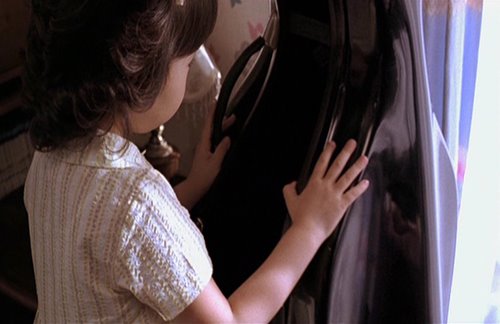
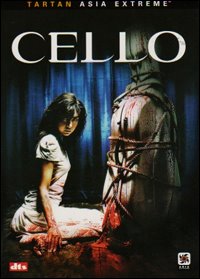
Cello, the horror movie

Sometimes just trying to play the cello, whether as an amateur, student, or professional, makes life feel like a horror movie. Well, now there's an actual horror movie (from Korea) available on DVD, bringing those cello-player nightmares to home theatres. It's called, approrpiately, Cello. Here are some stills I found at this review.

Hey, cut those fingernails before coming to your next lesson!


Yes, you'll fit. But be afraid, very afraid.


Sometimes I, too, want to make sure that cello can't get out of the case!

Saturday, September 09, 2006

Making classical music a human experience

In his latest blog post, Greg Sandow comments on some promising outreach developments by the Metropolitan Opera and the New York Philharmonic. He makes a very salient observation:

One caveat, though. Opening the doors -- getting out into the city -- is only the beginning. The biggest change has to be in what classical music institutions actually present. Performances have to feel like living art, or more generally like real human experience, and not like religious rites or some kind of gushy romance novel, where the content doesn't get much beyond "isn't it beautiful!"
Perfectly put--no wonder Greg's a professional writer. As I discussed in my post reflecting on my experience at a lieder recital, there will always be room for quasi-religious performances, especially for those whom classical music fulfills the role that for others is taken by formal religion.

"Real human experience" means, among other things, being able to respond and express and move; to be a participant and not just an observer. And it is interesting that many forward-thinking religious people--I'm thinking especially of Matthew Fox--are saying the same thing about worship experiences.

Just as some in classical music are saying we need to incorporate elements of other genres (pop, rock, non-Western music, jazz, etc.) and embrace new technologies, so does Fox's "creation spirituality" movement.

Mom was right

I once asked my mother, who recently retired as the piano professor at the University of Tampa, what the most important quality is for a successful musician. At the time, I was surprised by her answer: "the desire to play well."

But I came to see she was right. It is the desire to play well that fuels the commitment necessary to do everything else: all the hours of practicing, the lessons, the expense of instruments, etc. This comes to mind because I am playing the Shostakovich 1st Concerto on September 24, and the amount of hours of patient practice to work out the details are really something. We it not for the desire to play really well, to have as much technical control as I possibly can, I would not be sitting in my office at 10:15 PM on a Saturday night finally winding down.

Hours and hours over the course of weeks on a few particularly difficult passages. And the challenge is not to practice "hard" but to practice with calm and comfort and intelligence. After a while, the motions become automatic, and playing the once-difficult passages can become calming and centering.

Bernard Greenhouse used to tell me when I was his student that "any technical problem can be solved." He was (and is) right. But it takes time and thought and patience. He also pointed out that it just takes many, many hours of practice. Another of my teachers (sorry for all the name dropping), Leonard Rose, was famous for his commitment to regular practice throughout his career. And whatever problem I mentioned to him, his answer was always to practice more!

I started learning the Shostakovich in the late spring and have worked on it on and off since then. Now, of course, it is much more "on" than "off"! Passages that initally seemed impossible are now actually easy. I am feeling more and more confident and calm.

Why am I going on about this? Besides the fact that it is on my mind, it illustrates something important. While I have always been naturally musical and imaginative and expressive. Maybe that sounds egotistical, but those just happen to be my gifts. But cello technique? No gift there. I think I have virtually no natural talent for actually playing the cello. Every bit of technique has been worked out and developed. I have been smart enough to listen to my teachers and observe good players and learn from them.

And most of all, I have had the desire to play well that has brought me back to the cello every time I tried to quit, that drove me to study and practice and learn, and that gives me the patience to sit for hours and hours and hours.

Mom, as is so often the case, is right.

Thursday, September 07, 2006

After Die schöne Müllerin

Last night my DePauw faculty colleagues Keith Tonne (tenor) and Amanda Hopson (piano) did a wonderful performance of the complete Die schöne Müllerin cycle by Schubert. They even had the poems Schubert didn't use in the cycle (as I understand it, programs had run out by the time I arrived) read aloud between several of the songs.

It was a beautiful performance, exceedingly well-prepared. A large audience, much larger than the usual faculty recital audience (hmm, maybe things are picking up?--well, we'll see how things are 40 recitals from now), if a bit smaller than at my alternative concert a week before. The audience was quiet and respectful, and when I looked around the hall everyone seemed quite attentive. It was the a traditional concert environment at its best, and I enjoyed the concert very much.

It's the kind of concert that can be done in academia, where there's no extra fee paid to the faculty performers and where no tickets need to be sold. And academia is one of the places where it's entirely appropriate to do formal recitals with a reverently quiet audience. As I reflected on that, other thoughts came to mind as well:

  • This works in academia and in a few major cities, but I don't think leider recitals are doing well anywhere else.
  • Would applause between some of the songs, especially after the lighter ones, have absolutely ruined the possibility for a deep artisitic experience?
  • It was the end of a very long day and I'd had a large dinner. If I'd been able to clap once in a while, to express myself in some physical way, would I expereinced less occasional sleepiness and mind wandering. In other words, with some breaks in concentration, would my concentration during the music have been more focused?
  • It takes an audience well-versed in classical music to provide the kind of respectful, attentive, quiet envionment which was so enjoyable last night (and that's one of the great things about academia--where outside of a college or university in central Indiana would one find such an audience for lieder?).
  • Even if we accept that this is the ideal format in which to experience a perfromance of something likeDie schƶne Müllerin , this is not the format to bring in a new audience, an audience that once involved in classical music through a more participatory experience might then be ready and interested in experiencing a more "serious" concert environment.
And I'm still thinking!

Tuesday, September 05, 2006

Now you can see a bit of the concert , , ,

Ah, publicity. Ken Owen, the director of media relations at DePauw, read this blog and decided to write a story for the DePauw website about the classical-music-in-jeans concert. (If you are visiting this blog for the first time, following the link from the article, welcome.)

The story even has a video clip. And comments from audience members can be found at the first post-concert post. The clip shows the first episode of dancing at the concert. As some of the comments indicate, the dancing and the laughter perhaps had more to do with the transgressive spirit of the event than just allowing one's self to music. And I've since realized that the concert was also a piece of theatre, an event about smashing rules, and in that it connected deeply with the energy of college students making the transition from feeling constrained and repressed by the rules of the adult world to being part of adult culture themselves.

The news story has already resulted in one comment, on yesterdays' post, from a DePauw alum. When we talk about the "crisis in classical music," there are some who will point to the new concert halls being built (as described in Sunday's New York Times article) as evidence that some of us are wringing hands needlessly. Those new halls, and the big jump in ticket sales for the Nashville Symphony, for example (described in the article), are great news, indeed. Not all the news is bad.

Classical music isn't "dying." There will always be people who love listening to art music and who love playing it so much that they devote their lives to it. But as far as I can tell, there is indeed a genuine crisis when it comes to classical music being a central part of American cultural life. And from within the music education and music-performance worlds, there's a crisis in terms of having audiences for all the extraordinary classical musicians being trained. My reader, a graduate student at another university, wrote this in her comment on yesterday's post:

I saw your article on the DPU website and followed it here. I am at Notre Dame now, and see the same thing you see at DePauw, where people just won't come to concerts [emphasis added]. The orchestra here is pretty good (we played at Carnegie Hall in March), but we can't even get people to come to the concerts when we GIVE away tickets! The Glee Club (singers) have no problem, but the orchestra....we're lucky if the auditorium is 20% full at most.
The current situation is not the end of the world. It's a time of transition. It's a time for creative thinking and diversity in presentation and marketing, and for reexamining our assumptions of what defines a classical performance. There are great opportunities for composers and performers to do something new and different.

So experiment away.

Sunday, September 03, 2006

Looking ahead . . . next time plugged

I just came home from a wonderful afternoon and evening outdoor jazz festival, right here in Greencastle.

I found myself thinking about what Cleveland Johnson (the Interim Dean of the DePauw School of Music) mentioned in his comment on the classical-music-in-jeans concert post. He said he found himself wanting to hear the music amplified--something he would never before have imagined himself wanting at a classical concert.

At the jazz festival, there was certainly much more talking and laughing than at my concert. And there was dancing. And there were even kids energetically playing basketball, just a few yards away from the stage. People were walking around, including some selling raffle tickets and desserts. Chairs were constantly being set up or taken down. Blankets were laid out and picked up. People waved to each other, moved to be with each other, embraced. They ate and drank.

But we could still hear every note being played or sung, because it was all amplified. (Quite well, too.) There was much, much more audience-generated sound and movement at the jazz festival than at the no-etiquette-rules recital I did the other night. But with the performers amplified, music was never obscured by the other sounds. The dancing and basketball playing wasn't right in front of the performers, but to the side and a bit behind the stage, so it wasn't visually distracting.

Traditional concert halls are designed for traditional concerts. I'll do my next informal, interactive classical concert in a different sort of setting, and be amplified, too.

But it occurred to me while I was hanging out at the jazz festival that there was powerful symbolism, at least on the personal level, in using an official faculty recital in a university concert hall (where we used to have a list of 10 commandments for audience behavior, all stated as "thou shalt not . . .") to smash the tradition, generate some debate, and start myself on a new adventure. The more I think about it, the more I like it.

Thursday, August 31, 2006

The sky really IS falling. So dance!

(Note: I've done a slight bit of copy editing to this post a day after originally posting it.)

As I sit down to write, there are 23 comments to my first after-the-fact post on the "Classical Music in Jeans" concert, which all appear to be from different people. That's about 14% of the audience of 166--a pretty high percentage, I think.

The overall consensus in the comments seems to be that the informality and participatory atmosphere worked, at least to a point, but that things got a bit out of hand at times. Some people liked the playing so much that they would have liked more silence. (That's nice to hear, of course!)

In speaking with people today, what I've noticed is that the more seriously committed, the more deeply in love with music the student I've talked to, the less they liked the audience-participation aspects of the evening. But with colleagues, at least the ones I've encountered, the more concerned they are with the incredibly shrinking audience for classical music, the more enthusiastic they are about the high attendance and the high energy at the concert. (I haven't spoken yet with the two colleagues who walked out during the concert, though.)

166 people in attendance--that's nearly three times the average School of Music faculty recital attendance of 56.

The comments, the vast majority from students, are very thoughtful, very honest, and much appreciated. They focus for the most part on the experience the writer had at the concert, and of course, that's what I asked for when I emailed the music faculty and students and invited them to comment. Those who didn't like the participatory aspects didn't like them because they love music and wanted to hear it more fully.

The thing that doesn't seem to have come up in many posts so far is the larger context. I don't think many of us, students or faculty, really get that there is a crisis in classical music. It's like global warming and the national debt--things are worse than the present effects seem to indicate. Classical music is a catastrophe not waiting to happen, but one already well under way. And it may be beginning to snowball.

I had dinner with an arts administrator and consultant last year, and we discussed her views on the crises not just in classical music but in dance and drama as well. Classical music, especially orchestras and opera companies, will be the first to go, she predicted. Ten years from now, she predicted, there will be many fewer full-time orchestras unless something drastic happens.

Greg Sandow is writing and writing and writing about this (here and here) and working with everyone he can to get people thinking about what to do about this. (I'm one of the musicians he's impacted.) A lot of us do a lot of hand wringing and/or go into denial (head-in-the-sand, one colleague said to me today).

The music faculty here at DePauw has at times even considered cutting way back on the number of faculty and guest recitals, thinking if we had fewer concerts more people would come to them. I've always opposed this. I don't just love to make music, I need to make music. And if only 50 or 20 or 10 people come to hear me, I don't really care.

But are people not coming to concerts because we have too many of them? I don't think so. I think people don't come because they aren't enthusiastic about classical music, and they think it's going to be boring.

Now the people who do go to concerts already love classical music. But everyone else pretty much thinks it's going to be a boring experience in which basic human responses, including the need to move, must be repressed. Oh, gee, I could watch TV, or play cards, or smoke a joint, or drink a case of beer, or play Ultimate Frisbee, or hang out with friends, or even study . . . or I could go and listen to (what I assume to be) boring music and have to stifle my humanity.

What would you choose?

Most of our music faculty go to few concerts here. (And this is not a situation to unique to our campus.) Even the musicians don't think it's worth the trip.

We had a guest speaker here some years ago who thinks a lot about audience building, including at universities. He told us that if we want lots of people at our concerts, we can't look to the music faculty and students. There is a music fatigue we experience, and no matter how much one loves music, you can only go to so many concerts a week. It's the liberal arts faculty and students, and people from the community, who need to be the audience. That's the audience we need to build.

So my experiment with this concert was not about a new way to experience music for people who already love classical music the way it is. It was about creating an experience for non-musicians in which they could experience classical music in an interactive way. One in which their aliveness would not be deadened, but enhanced. I always hope that an audience will leave a concert more alive than when they came. As this concert approached, I decided I wanted to remove all the fear, all the inhibition, and let whatever wanted to happen happen. How enlivening can we make it for the audience?

Sure, there were times in which the audience participation reminded me of all the carrying on many new college students do: no rules, so let's run wild, let's do it because we can. OK. But really, so what? As the concert went on, there was less and less of that, and I think if we have more events like this a new culture will develop.

This concert was not for the classical music lovers. The concert was for the people who don't go to classical concerts and came because this one was different. Who came because someone invited them.

So I asked my seminar class this morning what the friends they brought thought. "My friend said, 'Oh my god, it was absolutely orgasmic,'" one told us. One guy brought four biology majors who had a great time.

A colleague in the philosophy department who brought his 5-year old son wrote me,

I had a couple of main reactions.

One was that allowing the audience to express itself more ended up giving us more to be entertained by and applaud--namely, each other, what with the dancing and all. Some undergrads have a really delightful innocence and sense of play.

The other was that the informality drastically reduced the interpersonal distance between performer and audience. In the usual stuffy setup, tuxedoed performer(s) silently glide onstage and do their thing while the audience watches. They are separated by physical distance, the difference in height of the stage, the darkness in the house which makes the audience l sort of voyeurs, and the (now) traditional silence. In that setting, I feel less or no personal connection or empathy with the performers, and find that what I mainly expect from them is precision and am disappointed by any lack of it. The whole thing is brittle.

Last night's informal setup allowed more empathy, making the music more of a shared experience rather than something transmitted from stage to audience. That was pleasant in itself and it heightened my enjoyment of some of the music, especially (dunno why) the sad parts. Sometimes the audience got so noisy it interfered, but I didn't mind much.

Main thing I want to say is this: I really hope last night's format doesn't turn out to be just an isolated incident.
Quite eloquent. Has he not put his finger on why many people don't go to classical concerts?

It's quite similar to this quote from Christopher Small's book Musicking (which I admit I haven't read yet, but is on my list), which I've copied from a post on Alex Ross's blog:
The silence that will greet tonight's performance while it is in progress suggests a different attitude [from the audience behavior of past eras]. Those who wish perfect communion with the composer through the performance can have it, uninterrupted by any noise that may signal the presence of other spectators. On the other hand, while our attention is without doubt active, it is detached; we no longer feel ourselves to be part of the performance but listen to it as it were from the outside. Any noise we might make would not be an element of the performance, as were the sighs and murmurs of the Parisian audience, but an interruption or distraction. I have even known the minute clinks and jingles of a female listener's Charm bracelet to put its wearer's neighbor in a rage. Who we are, then, is spectators rather than participants, and our silence during the performance is a sign of this condition, that we have nothing to contribute but our attention to the spectacle that has been arranged for us. We might go further and say that we are spectators at a spectacle that is not ours, that our relationship with those who are responsible for the production of the spectacle--the composer, the orchestra, the conductor, and those who make the arrangements for tonight's concert—is that of consumers to producers, and our only power is that of consumers in general, to buy or not to buy.
WAKE UP! PEOPLE AREN'T GOING TO CLASSICAL CONCERTS! When was the last well attended solo piano or voice or cello or string quartet recital, for which people actually bought tickets, where you live? My gosh, I can't think of a solo cello recital in Indianapolis that wasn't at a college for over ten years, and that one was Yo-Yo Ma.

I could rant on and on and on, and will some more in a later post. Watching the video of last night's concert, what is absolutely clear to me is that the audience felt part of the performance. And they responded with great enthusiasm.

There's still much to digest. Lots of ideas are being generated in my mind for how to build on this experience. Obviously it's not for everyone, especially those who like things as they are. But there are fewer and fewer of us in that category. Those of us concerned with the future of classical music can't afford the luxury of the status quo.

WHAT CAN WE DO TO MAKE CLASSICAL CONCERTS SOMETHING PEOPLE WANT TO ATTEND? AN EXPERIENCE THAT SEEMS WORTH EXPERIENCING?

That's the question last night's concert was an experiment in answering. It's not better posters and fewer concerts that will bring in larger audiences. It's different sorts of concerts (and they don't have to all be what we did last night, either).

When it comes to the future of classical music, the sky really is falling. The audience is shrinking. Young people aren't coming in to replace the older members as they pass on. It's as simple as that.

And if it takes letting them dance to get new audiences in, let's let them dance. I can't think of anything better to do in a crisis.

The Classical Music in Jeans Concert

Last night was the "classical music in jeans" "informal/interractive musical event," the cello/piano recital of short Romantic pieces in which the audience was invited to clapp between movements, clap during movements, dance/move in front of the stage, and otherwise respond freely. I'd promised my students that if they brought non-music major students with them, I'd wear jeans and a Hawaiian shirt.

We had a big crowd, and the music students had indeed brought a good number of their liberal-arts major friends. And it was very interractive. And the audience was very enthusiastic.

There was indeed a lot of dancing, including some very uninhibited moving by young children. From time to time, the little kids became the focus of attention. As a performer, it was such a different experience--exciting, relaxing, and distracting all at once--that there will be a lot to write about.

For now though, I'm getting the post up quickly so that members of the audience can post comments and observations. So please do!

By the way, if you add a comment, please note if you are a classical musician (student or faculty) or not--especially if you were one of the liberal arts students invited by a music student. Thanks!

Tuesday, August 29, 2006

Comfort zone? What comfort zone?

As I get ready for tomorrow's alternative classical music event (with everyone encouraged to move and respond audibly and non-traditional times), there is some trepidation. I'm a worrier, so I worry about almost everything, anyway. And this is different enough from anything I've done before that it is definitely out of my confort zone. (Most of what follows below is from an email I sent to Greg Sandow, who is being wonderfully supportive of this experiment,)

Yes, there's a very slight concern about peer disapproval, but that doesn't feel significant (one of the upsides of being an out gay man is being comfortable with the disapproval of traditionalists). I am more worried that some people who are used to classical concerts, who like having the silence while they listen, etc., may be distracted and bothered. That for them, whatever moving, clapping, and other visual or audible expressions may occur will be distracting and take away from the experience. The feeling that some of my long-time local fans (for lack of a better word) may be uncomfortable at this concert is feeding a new (although mild) anxiety.
I'm more worried that nothing unusual will happen! Or that the audience may be too noisy, or the moving, if it does happen, may include young people with nervous energy doing silly stuff that wont be stemming from the music itself but from adolescent silliness.
So I keep reminding myself that it's an experiment, that I can draw on all my Zen, meditation, and New-Agey experiences to let go of attachment to any particular result and embrace and include whatever happens, and that I use my workshop-facilitator skills to create the appropriate atmosphere and encourage the kind of involvement I'd like to see. But I know that whatever happens is unlikely to be exactly what I imagine, and the control freak in me is freaking out!

More than anything, though, I think it will be a fun adventure.

My Experiment in an "Alternative" Classical Performance

Well, like just about every classical musician I know (especially those who don't have a full-time gig in New York, where classical music life is much healthier than in many other places), I'm worried about the shrinking and the "graying" of classical audiences. Even at DePauw University where I teach, we see this phenomenon. A fantastic School of Music, a tremendous number of faculty recitals, guest artist events, and wonderful student concerts, yet smaller and smaller audiences. I don't have any numbers to back up my general impression, but it sure seems to me that there has been a declining number of non-music majors and non-music faculty attending concerts over the 18 years I've been teaching here.

Over the last year, I've become quite taken with Greg Sandow's blogs about the future of classical music (links in the right column). Inspired by his Juilliard course "Breaking Barriers: Classical Music in an Age of Pop," I'm teaching a seminar for first-year students at DePauw called "Creativity, Non-Western Music, and the Future of Classical Music."

The students and I have been talking about alternative ways of presenting and performing classical music. What's so off putting to their peers, and often to themselves, is the formality and the atmosphere of fear that pervades the audience, espeically the younger members of the audience. Don't make noise. Don't clap between movements. And whatever you do, don't move.

It just happens I'm giving a faculty recital tomorrow (Wed. 8/30) night, of short Romantic pieces. And so my pianist colleague and I have decided to throw all the rules out the window and invite people to respond however they wish. Quoted below is an email I sent to all the music students. Other versions went to the enitre university faculty and have been posted on the university's intranet classified ad board.

So far, only positive response from colleagues and some excitement from students. Stephanie Gurga, the pianist perfroming with me, and I played part of the program for my seminar class this morning so they could practice moving, clapping, etc. There was a lot of nervouse energy and a bit more chatter than I'd prefer at the concert, but it was also fun to play for people moving and having a good time. One thing I realized is that when the audience is free to move and respond, the focus becomes more on the collective, shared experience and less on the performers and how "well" (in my case) I think I'm playing.

More soon. Meanwhile, here's that email:

Wednesday Aug. 30
7:30 PM Thompson Recital Hall in the PAC
The Romantic Cello: An Informal and Interactive Musical Event
Eric Edberg, cello and Stephanie Gurga, piano
featuring short, entertaining pieces
one hour max
performers in jeans
clap whenever you want
and dance in the aisles if you feel like it
Ever think classical concerts are too formal and have too many intimidating rules? Could one of the reasons classical audiences are growing older and smaller be that the whole stuffy ambience, in which newcomers are shamed if they do something natural like clap between movements or during a movement, be part of the problem? (Did you know that before the 20th century, audiences clapped between movements and even during them, and composers like Mozart encouraged it?)
Stephanie Gurga (a recent SoM grad and brilliant pianist) and I think so. So we're trying an experiment. To make the atmosphere unintimidating, we're going to dress very casually in Wednesday evening's recital. I'm wearing jeans.
And the usual rules of audience deportment are suspended for one night. Clap between movements (well, there's only one multi-movement piece). Clap after a good lick, or shout out an "amen" or a "boo." Dance in the aisles or in front of the stage.
I made a deal with my first-year seminar class (which is looking at the future of classical music): I'll wear jeans and make the concert as fun as possible if they'll bring someone new to classical music to the recital. So I'm making the same invitation to all you music majors. Our future as classical performers is dependent on getting young people to start coming to classical concerts again. Let's see if this helps.
Bring a friend who's not a classical concert-goer, and let them know they don't have to worry about clapping at the wrong time.

Sunday, August 06, 2006

Permission

Speaking of LGBT issues, this video doesn't directly mention anything about them, but is perhaps the best thing I've seen on same-sex marriage. (Thanks to Andrew Sullivan for posting it on his site recently.)


(Sometimes embedded Youtube videos don't load; if you don't see the vido above, try this link.)

More like flying an Israeli flag in a neo-Nazi neighborhood

J.R. and Robin Knight run the Lakeway Hotel Bed and Breakfast in Meade, Kansas. As TV station KBSD reported on July 20, J.R.'s 12-year-old son bought a rainbow flag at a Wizard of Oz Museum. Nobody involved realized that rainbow flags are a nearly universal symbol for LGBTQ pride and support of diversity until the local radio station started making a fuss. The community is not one, evidently, to tolerate even a mistakenly-hoisted symbol of tolerance for non-heterosexuals who think they have the right to lead their own lives. (Plenty of further stories, by the way, on these Google searches: web and news.)

The Knights, however, were not as horrified as their neighbors to learn the flag's more common connotation. So they are standing their ground, keeping the flag up, and receiving all sorts of harrassment, much of it coming, I'm sorry yet not surprised to learn, from self-described Christians, who seem to be overlooking all that stuff about not casting the first stone, loving your neighbor as yourself, etc., etc.

I was particularly struck by this comment in the KBSD story:

Local resident, Keith Klassen says the flag is a slap in the face to the conservative community of Meade. “To me it's just like running up a Nazi flag in a Jewish neighborhood. I can't walk into that establishment with that flag flying because to me that's saying that I support what the flag stands for and I don't," says Klassen.
I'm assuming, perhaps incorrectly, that Mr. Klassen is a "Bible-believeing" Christian, and that his thinking is influenced by the conservative religious/movement which believes that the U.S.A. was founded to be a Christian country and that much of the country's prosperity now and in the future is inextricably linked to the extent to which it institutionalizes and enforces "Biblical morality." Whatever his personal religious views, the idea that those not following the current popular understanding of "traditional" and "Biblical" morality (I say "current" since other moral positions thought not that long ago to be Biblical, regarding issues such as women's rights, slavery, and racial equality, are no longer in fashion among most fundamentalists and Evangelicals) are a threat to the health of society as a whole is a powerful one, shaping the politics of many.

Klassen's "running up a Nazi flag in a Jewish neighborhood" comment really stuck with me. Sure, they are flying a flag which offends the values of many of their neighbors. But other than that, Klassen has it backwards.

What the Knights are doing much more the equivalent of flying an Israeli flag in a neo-Nazi neighborhood.

The rainbow flag symbolizes inclusion, diversity, mutual respect and tolerance, and celebration of different people living together as theirselves. The rainbow flag says lesbian, gay, bisexual, transgendered, and otherwise "queer" people have the right to live openly, safely, and free of harrassment. It is a statement about the equality of all people.

Nazis and neo-Nazis, on the otherhand, believe in the superiority of one group of people over the other. The Nazis exterminated millions of people whom they decided were inferior and represented a threat to the "master race." The Nazi flag represents the perpetrators of the Holocaust. The Nazi flag represents facisim and murder and genocide.

Are those harrassing the Knghts acting more like neo-Nazis or Jesus?

Meanwhile, many people around the country are sending messages of support, and even contributions, to the Knights as they experience a loss of local business. That's a great thing about the internet, isn't it? We can find out quickly about incidents of harrassment and do something to help out.

By the way, I am NOT NOT NOT saying that Mr. Klassen or anyone else in Meade is a Nazi. I don't like these "like a Nazi" comparisions anyway; it trivializes the Holocaust. Mel White, of Soulforce, taught me long ago to think the best of those with whom I disagree and to understand that those who campaign against equal rights for LGBTQ people as good people who are well-meaning, afraid, and misinformed. What the folks in Meade need is less condemnation and more interaction with a variety of nice, out LGBTQ folks and learn that we are human, too, and quite often great to hang out with. By not giving in to the fears and prejudices of the people who are their neighbors, the Knights are doing something very important for their community. I'd say bless 'em, but it seems as if they already are.

Sunday, July 30, 2006

I Knew I Should Have Gone Into Conducting!

And no wonder so many cellists have (Casals, Rostropovich, Toscanini, etc.).

James Levine made $3.5 million last year, according to this Boston Globe article. Lorin Mazzel almost $2 million, just from the NY Philharmonic. A little guest conducting here and there, and you're talking some real money.

And you don't have to buy an extra airplane seat for a baton, unlike so many professional cellists who buy a ticket for their cellos to insure it arrives at the right place, at the right time, in one piece.

9/11 Conspiracy Theorists and Their Debunkers

I really need to take the TV out of my bedroom. Because I just can't keep myself from doing a bit of channel surfing before going to sleep, and, before you know it, I'm hooked into a Law and Order episode or something on one of the C-SPAN channels.

Last night, it was C-SPAN. Several times this weekend, C-SPAN has broadcast a panel discussion held by "Scholars for 9/11 Truth." The program can be watched by going to the C-SPAN home page and clicking on the link for "Theories About 9/11." The "Scholars" believe that the WTC buildings collapsed as the result of a secret, expertly planned and executed controlled demolition, and that some element of the U.S. government, perhaps a rogue element, was behind this. Other conspiracy theorists believe there was a third plane, that it was actually government planes which collided with the WTC towers and the Pentagon, or that no plane hit the Pentagon at all, etc.

I am not one for conspiracy theories--especially government conspiracy theories. First, our government just isn't competent enough to pull off a conspiracy. And there's the Occam's Razor
principle, commonly understood as the simplest explanation is the best one. In this case, the planes were hijacked, hit the towers, and the resulting fire caused structural elements to fail and the buildings collapsed.

But these guys got to me. They were so passionate and seemed to have their science lined up well. I had heard about these demolition/conspiracy theories before. And I've always been curious about the collapse of the towers. I remember the morning of 9/11 and a student telling me what had just happened (the first plane hitting a tower). I told her not to worry, that these sorts of buildings were designed to withstand being hit by an airliner. And when I watched the towers collapse, I was struck by how similar it looked to videos of planned demolitions of large buildings. And when you think about it, it seems like a miracle in a way that they collapsed to perfectly into their own footprint, and didn't fall to the side and topple other buildings.

So in a late-night fit of curiosity I started Googling away and visited the "Journal of 9/11 Studies," "Prison Planet.com," "911revisited.com" (where you can watch an hour-long video online) and several others, including the paper by Brigham Young physics professor Steven Jones, "Why Indeed Did the WTC Buildings Collapse?" (Jones is a founding father and the leading intellectual light of the demolition-theory movement.)

Today, I did some more Googling around. I wanted to find some sort of intelligent response to the demolition theories (which were sounding rather convincing but also left me uneasy, since there didn't appear to be endorsement by civil engineers). There can be a problem sometimes that mainstream people simply dismiss without answer what appears to be a fringe group, and so that group develops more and more members and legitimacy. (Much of the success of the Religious Right has been a result of moderates and liberals not taking seriosuly the potential power of what they perceive as, well, nut cases like Pat Robertson.)

But in this case there is some good answering information to be found. The Wkipedia article on the "Collapse of the World Trade Center" gives what appears to be a good (if poorly documented in its text) overview, and, more importantly, some excellent links.

I found the Journal of Debunking 911 Conspiracy Theories quite helpful. Like the Jornal of 9/11 Studies, which it has been set up to answer, it is not a real journal as much as a group of like-minded people "peer reviewing" their own papers. The debunkers are quite upfront about this, and it's part of their point: how easy it is to set up a website and call it a journal. Debunking's first issue contains a point-by-point analysis and refutation of the main claims made by the adherents of the controlled-detonation theorists. Both sites refer readers to the October 2005 report by the National Institute of Standards and Technology (NIST), which found no evidence for detonations and concluded that the combination of the fires not just from the jet fuel but of the contents of the floors hit by the planes and design elements of the buildings led to the collapse.

The conspiracy/detonation folks seem well-intentioned, passionate, and full of righteous indignation at a government coverup. (Some are clearly on enormous ego trips and relishing a quasi-messainic, prophetic role.) They look at the extensive video evidence, their own scientific and quasi-scientific analyses, and the simplest explanation, the Occam's Razor, is, to them, that the buildings fell as the result of controlled detonations.

Having read summaries of the NIST report and the "debunking" articles, the Razor seems to me to slice in the other direction. It's true, though, tha Jones's paper and his his very long PDF reply to critics raises a lot of questions, especially regarding what he says is evidence of thermite, a substance used in detonations. I have not yet read the final NIST report, so I don't know if it discusses this thermite hypothesis, or otherwise explains the phenomena from which Jones has developed his argument.

Part of my point in writing about this here is to make the point to all who may visit (thanks to Technocrati and similar blog search engines) is that it is important to read as much material on BOTH SIDES of a controversey as possible, to evaluate the credentials and scholarship of speakers and authors, and also the reliability of the sources each side relies on. Are you reading junk science, pseudo-science, or selective use of out-of-context evidence? Or is it reliable, well-referenced, and well-supported by mainstream scientists?

And what are the other (possible) agendas? Self-aggrandizement, a need for attention, compensation for low self-esteem by recreating one's self as a prophet, selling website memberships, making money from books and videos? All these can be powerful factors in shaping one's views and actions.

I just a cello player. I'm not competent to judge the scientific arguments--and very few others are, either. I find it hard to believe that there's been a massive conspiracy and coverup that has lasted 5 years, one involving not just many levels and branches of government, but the news media as well. As I said above, there's the competence issue. And the keeping people quiet issue.

Nearly 5 years later, it's still still nearly impossible to accept what happened that day. A secret demolition of the buildings is nearly impossible to believe--but so is the idea that the crash of a single jetliner on the upper folors of each of the twin towers could cause them to collapse so quickly and perfectly, and that consequent fires alone could cause the WTC Buliding 7 to collapse just as perfectly without having been struck by an airplane.

Whatever happened, it was a tragedy.

Friday, July 14, 2006

That's OK, You Don't Need to Come to Class

The NY Times is reporting that (gasp) athletes at Auburn University have been getting great grades without having to go to class.

One of the university’s prominent football players was being honored as a scholar athlete for his work as a sociology major. Professor Gundlach, the director of the Auburn sociology department, had never had the player in class. He asked two other full-time sociology professors about the player, and they could not recall having taught him, either.

So Professor Gundlach looked at the player’s academic files, which led him to the discovery that many Auburn athletes were receiving high grades from the same professor for sociology and criminology courses that required no attendance and little work.

. . .

The availability of better grades for some athletes who did not attend class did not surprise professors who said Auburn sometimes emphasizes athletics at any cost. In December 2003, the university was placed on probation by the Southern Association of Colleges and Schools partly because of concerns about whether trustees had too much involvement in the athletic department.

. . .

Professor Gundlach took the case to John Heilman, a university administrator who would soon become Auburn’s provost. He included paperwork showing that Professor Petee taught more than 250 students individually during the 2004-5 academic year. He also provided Mr. Heilman with examples of how prominent athletes had cut academic corners.

“It was at that point that I figured the corruption runs the full gantlet of the administration,” Professor Gundlach said. “We were getting sociology majors graduating without taking sociology classes. I’m a director of a program putting out people who I know more than likely don’t deserve a degree.”

It reads like something from Tom Wolfe's I Am Charlotte Simmons. I've been oblivious to this sort of thing, since I'm not a sports fan. There was a similar scandal at the University of Georgia around the time I had a temporary position there in 1985. (Oh my! That's over 20 years ago. Some of the students I taught then could have kids going to college soon. I really am middle-aged. No! No!)

This one problem we don't have at private liberal-arts colleges like DePauw, where I teach. We are in a division (III? IV? XXIX?) where we don't give athletic scholarships and the football players and even the cello students can read and write.

The violists, well, I'm not sure about them. (Ouch! Just kidding.)

Saturday, June 24, 2006

Diet Coke and Menthos

Wow! I see millions of science projects this fall featuring these two items!


More here.

Misaddressed email

I own a domain name that is very similar to that of a community music school in England. I registered the name some years ago for a project that never took off, but I can't bring myself to cancel it.

So every once in a while I get an email message intended for someone at the school. I just correct the address and forward it on. (My little bit of volunteer work for a school I've never seen!).

Today's email brought this misaddressed message (I've changed the names):

Hi Tim,

Trust the cheque got to you! Have booked/diarized Edward and Ron for drum lessons, commencing Wednesday mornings :

Edward 7.25 – 7.55 a.m. (students need to be seated in homeroom 8.30 a.m.)

Ron 7.55 – 8.25 a.m.

Unless otherwise told, the boys will be outside your drum lesson room (high school building) at 7.20 a.m. on Wednesday 30th August, 2006.

Please would you confirm by return email that this is okay!

Have a wonderful summer break!!

I love drumming (hand drumming, in my case). But giving drum lessons at 7:30 AM? I'd need a good summer break, too!

Saturday, June 10, 2006

Old and New Concert Marketing

I'm fascinated by this review of this recent chamber orchestra concert on Manhattan's Lower East Side. From what I can tell from the review, it's an example of young professional classical musicians being innovative, bringing in a different kind of audience in a different kind of setting. Of particular interest is Bernard Holland's (the reviewer) empasis on the quality of the playing, and also his interesting observation about the physicial circumstances of classical concerts.

As Greg Sandow keeps writing about on his book-in-progress blog as well as his general blog, the future of classical music lies at least in part in creating new performance circumstances.

As far as old performing circumstances go, I was saddened to receive a letter yesterday from the Inidianapolis Symphony offering me 20% off for tickets for next weekends season-ending subscription concert. Obviously, ticket sales aren't going well.

Ironically, I'm planning to go anyway. The soloist is the up-and-coming cellist Alban Gerhardt, whom I want to hear. (And, wow, one of the review quotes says he "oozes" passion. Never seen passion "ooze" before--certainly don't want to miss that!)

The letter focuses on Gerhardt. It was sent to my home address, meaning it's from a database of past ticket buyers, not one of cello teachers (unless they bought the American String Teacher Association mailing list for this area). I did buy 5 or 6 tickets to a Lynn Harrell concert with the ISO last fall, and took some students. That may be why I got the letter--it's the first such letter I've received.

I was planning to see if I could get a comp ticket from a friend in the ISO. But as I know from running my own little chamber music series, every dollar helps. So I may buy a ticket!

It's been a great season for cello soloists with the ISO, by the way. The opening concert featured Arkady Orlovsky, the orchestra's wonderful principal cellists, playing Bloch's Schelomo. Then in early December came Lynn Harrell playing the Dvorak concerto. And now Gerhart.

And, unfortunately, plenty of seats available for all three. Now, that's nice if you need to get a ticket at the last minute, and it's nice to get 20% off anything. But it doesn't suggest things are going all that well with the ISO in terms of getting people to come to the concerts.

Thursday, June 08, 2006

Cello Videos on Youtube and Elsewhere

I love watching cello videos! And I'm not the only one. Some of the great folks at the ICS have been putting clips of both commercially produced videos and their own performances up on www.youtube.com.

Most of them can be found in the ICS youtube group at www.youtube.com/group/ICS.

Some of my favorites include Leonard Rose and Glen Gould playing Beethoven, and Casals playing Bach and his arrangement of the "Song of the Birds."

And someone posted this link to the videos and MP3s at Daniel Mueller-Schott's site. Fabulous playing, including the entire Haydn C Major concerto. Another incredible young cellist of whom I was previously unaware.

Whew! Some time to write again.

Well, I took about a month off from blogging, didn't I?

There was the end of school crush, which coincided with the start of the summer concert series I organize and play on. Organzing the series, doing fund raising, writing press releases, desiging posters and programs, etc., is both time and energy consuming--especially at the start of the season.

The support for the series here in Greencastle, Indiana, which has a population of only eight or nine thousand people, has been wonderful. This is the series' second year. The number of contributers has more than doubled. We've been able to go from six to seven concerts, double the amount of the small honoraria we pay the performers, give a bit of gas money to those who come from Indianapolis and Bloomington (each about an hour away), etc.

Now that the start-up phase is done, I have some time to write. Most of the writing the last couple weeks has taken place in the Internet Cello Society web forums; Mike L nudged me in a thread to start blogging again.

There are many great things about getting the concert series going. One unexpected one for me is that I'm developing a new set of skills, ones that I think add a new dimension to my teaching, as well as to my personal/professional life.

Friday, May 05, 2006

I'll be back soon.

It's the end-of-semester crush. The status report on my Faculty Fellowship project was due this past Wednesday, so I was in overdrive working on the draft of my book (in progress on my other blog, see the links at left), writing a number of sections I have yet to post.

I'm off to a Music for People weekend. Some time for creative insanity. I also hope to catch Sunday afternoon's Chamber Music Society of Lincoln Center concert on the way back for the last week of classes.

I'll be back, but it may be a week or two!