Friday, November 03, 2006

The bigger they come, the harder they

. . . tumble out of the closet.

In the end, the truth comes out. The incompetence and malfeasance of the Bush administration. And now the hypocrisy of one of the leading evangelical pastors and proponents of a a federal constitutional amendment to ban same-sex marriage: Ted Haggard.

Many details are in dispute, but Haggard, until recently the head of the National Association of Evangelicals, and an evangelical leader with close ties to President Bush, has admitted buying methamphetamine and seeing a male escort/masseur at least once. The escort says it was much more than once: monthly visits for over three years. Haggard says he did not "have sex" with Michael Jones, the escort. (Check out the stories in the New York Times and The Advocate, which also has an interview with Jones. And Andrew Sullivan is blogging about it like crazy.)

Well, we don't know for sure, but Jones's story--that he recently saw Haggard on television and recognized him as his client, and then was so horrified to discover the damage he was doing to gay men and lesbians that he decided to out him--is plausible. And it is not implausible that Haggard could be trying to hold onto his family and his sense of internal consistency by narrowing defining what it is to "have sex." I'm well aware that many teenagers, for instance, don't consider anything but intercourse to be "sex." So you can have had countless orgasms with another person but as long as there was no intercourse, you are still a "virgin."

It's sad. Lots of anti-religious gay-rights folks are delighted. But as a gay formerly married man, who loved being married to a woman, who still loves his ex-wife, who loves his children, who loves being a family guy, I'm well aware of the pain involved for everyone. I tried throwing myself into fundamentalist Christianity, hoping Jesus could make me straight.

I can even imagine Haggard rationalizing his attraction to men as a weakness or temptation that he was unable to conquer and managed to keep in check by monthly relief. Many married, closeted men do something similar, with anonymous sex in bath houses, or with escorts, or with some regular sex buddy.

It's good that something like this brings a much needed jolt of reality into the moralistic evangelical fantasy that a religious belief and prayer and the quasi-therapy of ex-gay ministries can change someone's sexual orientation. If Haggard is indeed bisexual or primarily attracted to men, I hope he can develop a new self-identity which embraces and affirms his sexuality, and that he can use his many skills to help the conservative evangelical world move towards that same sort of acceptance and affirmation of gay men and lesbians, most crucially of young people who are discovering they are attracted to their own sex.

And I'd like to hope this might also jolt folks like Pat Robertson, James Dobson, and Jerry Falwell into realizing the great damage so much of what they have been preaching about homosexuality has done.

But I've given up on hoping about these folks.

"Neo Culpa"

Yesterday I wrote,

The mismanagement of national security over the past 6 years is of such a magnitude that it's nearly incomprehensible. The Iraq debacle is as sickening as it is tragic.
Well, it turns out that some of the most prominent neoconservative proponents of the Iraq war are thinking the same thing. David Rose's "Neo Culpa," which just hit the Vanity Fair website, leaves me almost speechless. Richard Perle, Kenneth Adleman, David Frum. Here's Adleman:
"I just presumed that what I considered to be the most competent national-security team since Truman was indeed going to be competent. They turned out to be among the most incompetent teams in the post-war era. Not only did each of them, individually, have enormous flaws, but together they were deadly, dysfunctional."
And Frum:
"I always believed as a speechwriter that if you could persuade the president to commit himself to certain words, he would feel himself committed to the ideas that underlay those words. And the big shock to me has been that although the president said the words, he just did not absorb the ideas. And that is the root of, maybe, everything."
When Bush was first (sort of) elected, I thought he couldn't be as stupid as he seemed. The news reports of the "CEO-style" presidency impressed me. When the invasion of Iraq was looming, a friend in the Air Force reserves told me there was no plan for after the invasion. What did he know? He was just in the reserves, for crying out loud. No President, no Secretary of Defense, no Pentagon brass could possibly undertake a war without a post-invasion plan.

Or so I thought.

I was on the fence about Iraq. Like many Americans, I decided to trust what the administration was saying. So many of my colleagues were exasperated with me. And it turns out they were right.

Thursday, November 02, 2006

I love John Stewart and Stephen Colbert

And their colleagues.

This is a golden age of political satire. Both The Daily Show and The Colbert Report on Comedy Central consistently illuminate political hypocrisy in a way that is wildly entertaining and profoundly insightful. They provide some of the best political commentary to be found in the media today. John Stewart is perhaps the greatest educator to ever use the television medium, and his work has given brith to Colbert's. The last person to so brilliantly use television to entertainingly educate, with such extraordinary brilliance and insight, was Leonard Bernstein. Completely different field, of course.

Last night both TDS and TCR skewered the Republican attempts to make Tuesday's election about John Kerry's gaffe. The mismanagement of national security over the past 6 years is of such a magnitude that it's nearly incomprehensible. The Iraq debacle is as sickening as it is tragic. And these brilliant political comics and satirists, masters of their media, show this in a way that is incredibly clear, and more effective than long-winded essays.

Saturday, October 28, 2006

A cello player who writes

I don't just enjoy writing, some part of me needs to write. I spent much of the early part of the week drafting a very long proposal on the behalf of a committee on which I serve at DePauw. The proposal is the culmination of over a year and a half's work, including much disagreement within the committee. The process was so infamously contentious that the committee which must review my committee's proposal requested a recounting of how we reached our decision.

And so the proposal needed to not only present the arguments for our recommendation itself, but also given an even-handed and fair account of the disagreements and how they were eventually resolved (or at least moved past). It took many hours to draft; overall it was a fascinating and enjoyable process. There's a certain satisfaction that comes from doing a significant piece of writing, especially when it was well-received by my colleagues, many of whom expressed their appreciation.

One of my colleagues was so impressed with the draft that he honestly asked me why I was a music professor when i could write so well. (OK, no pretension of false modesty here. And once I wrote a document for another committee, which included members of the Board of Trustees, one of whom said, "If you can write like this, what the hell are you doing in the School of Music?") I remarked that had I not gone into music, I think I'd have enjoyed being a lawyer. I love developing arguments and being an advocate.

But a few days of being absorbed by this process, as interesting and enjoyable and satisfying as it was, left me feeling not really myself. Why? There wasn't time or energy left to really practice. And it came after a week out of town, where I did some playing and had beautiful experiences doing so with my relative who is recovering from a stroke. It was a fairly limited amount of playing, and no actually practicing or working.

When I don't practice and play a lot, when I don't feel really in shape as a cellist, I get somewhat miserable. (Can one really be only somewhat miserable?) People who live with me discover this rather quickly. My former father-in-law was the first to name it. "If Eric doesn't practice, he's pretty much impossible to live with," he explained with a sigh and a smile--and combination of exasperation and paternal pride (he is a musician, too) that I've never experienced before or since.

And so there it is: when I'm not being a cellist, I don't feel myself. It's something I recognized back in my senior year of high school. I was faced with the choice of going to a conservatory or going to a university. My academic teachers wanted me to major in literature or philosophy; my music teachers urged me to pursue performance. (False modesty thrown to the wind, I'll also mention that of my father's law partners said I was one of the smartest people he'd ever met--which surprised the heck out of me, since it seemed to me we'd had too little contact for him to have any sense of me); he told my father he couldn't understand why I'd even consider going into music when I could become a doctor or a lawyer.)

I wrestled with the decision. (If you've read this blog much, you know that I'm an agonizer and have a hard time being decisive about important decisions.) This was a hard one, at least as long as I tried to figure out what I should do.

Then somehow I realized something which made the decision for me: that I felt the most alive, the most fully myself, when I was making music. 30, 31 years later, it's still as simple as that. I'm most alive, most me, when I'm playing and practicing and making music.

So as much as I like writing, I think it's safe to say I'm a cello player who writes, not a writer who cellos.

The Interent: It's not just for porn anymore

The Internet can be just amazing. The other day, I was in dire need of a cello part for the Mozart G minor viola quintet (that's one with two violins, two violas, and a cello). The DePauw library didn't have it, the libraries in Indianapolis (including Butler University) didn't have it, and the violist who organized the performance I'm participating in Monday night couldn't find his copy. I posted a message in the Cello Chat forum at the Internet Cello Society, and within a couple of hours two kind people had emailed me PDF files of the part. And one directed me to a web site that has PDF files of public-domain copies of all the Mozart string chamber music.

And like many gay men and lesbians, I was very interested to not just learn about the New Jersey Supreme Court on same-sex unions. Within minutes of the decision being announced, I was able to download the entire decision (including all the concurring and dissenting opinions) from the court's website. "The Internet is for porn," goes the hilarious song from Avenue Q. It's also very good for democracy.

Wednesday, October 25, 2006

Huh?

Who writes the headlines at www.365gay.com? "N.J. Court Rejects Gay Marriage" is what the site chose to run over its article on today's decision. Rejects gay marriage? The court said the legislature has 180 days to either include same-sex couples in existing marriage laws or create civil unions with the same rights and benefits as opposite-sex marriage.

NJ Supreme Court Rules in Favor of Same-Sex Unions

One more step towards equality. From today's opinion in Lewis v. Harris (note: PDF file):

HELD: Denying committed same-sex couples the financial and social benefits and privileges given to their married heterosexual counterparts bears no substantial relationship to a legitimate governmental purpose. The Court holds that under the equal protection guarantee of Article I, Paragraph 1 of the New Jersey Constitution, committed samesex couples must be afforded on equal terms the same rights and benefits enjoyed by opposite-sex couples under tecivil marriage statutes. The name to be given to the statutory scheme that provides full rights and benefits to samesex
couples, whether marriage or some other term, is a matter left to the democratic process.
Great news at the end of a long day. The downside is that Republicans may be able to use it to rally the evangelical base in some races. But after 6 years of a president supposedly in favor of a constitutional amendment banning same-sex marriage, most of it with solid Republican majorities in both houses of Congress, will this carry as much scare power as such decisions have in the past?

We're having Coming Out Week here at DePauw. I've been wearing a sticker with a rainbow cow and with white letters "C O W" superimposed--United DePauw handed them out. The best, the most effective, perhaps the only truly effective way to make changes for LGBTQ people is for us to come out, be known, and insist on full rights.

And now I'll go read the decision.

Saturday, October 21, 2006

Healing Music, II

I got to spend a lot of time with my beloved stroke-patient relative today. He is making such fast recovery that even the hospital staff seem genuinely amazed. The stroke happened not quite four weeks ago; it was massive and the result of a split in a major artery. That he survived is, perhaps, a miracle, and the prognosis at first was most uncertain. Actually, the prognosis for recovering the use of his left side was initially quite certain: he wouldn't. But he's now able to stand up unassisted, to walk with a cane, and was even negotiating stairs in his therapy today. His ability to carry on a conversation is quite normal, and he's making great progress with his speech therapist on reasoning and analysis tasks that involve the parts of his brain that are recovering. In his early forties, he's a brilliant and increasingly well-known research physician, a leader in his field. Each day the probability that he'll be able to fully resume this important work increases.

My role while visiting this week (while on fall break) has been to help with the kids, be a moral support to his wife, and to just hang out with and play cello for him. The just being there is the most important thing, it seems to me.

This evening, our last, was perhaps our most intimate. After his wife and their four-year-old twins had gone home, I sat by his bed and we talked of various things until he was sleepy. And then he asked if I would be willing to play him a lullaby and if I would mind if he fell asleep. I joked that audiences do that all the time at my concerts, so I'm used to it. (At first he thought I was serious, so I reassured him that this was not the case and I'd be happy to play him to sleep.)

I softly improvised, mostly pizzicato, for a while. He was sleeping, perhaps lightly, I thought. I played the Sarabande of the Bach C Major Suite and the Allemande of the G major, both pizzicato, as gently as I could, until I was sure he was asleep. Then I put the cello in its case as softly as possible, turned out the one light in the room, and crept out as quietly as I could.

It was a uniquely beautiful moment for me. It was such an open and trusting request for him to make.

I hesitated to write about it here, because it was so personal. But I want to remember it. And for those musicians who still read this blog despite my recent political rants, perhaps reading this story will affirm an inner sense that there are many possibilities for making music beyond traditional concerts. I used to play quite often in hospitals and nursing homes, and then got preoccupied with other things. I'm going to do more of it. What better thing is there to do as a musician?

Friday, October 20, 2006

Thanks be for evangelical diversity

I mentioned the green evangelical movement in my last post. Here's an MSNBC story about it, as well as www.creationcare.org, the website of the Evangelical Environmental Network and Creation Care magazine.

And just as there are green evangelicals, there are gay-affirming, Bible-believing evangelicals as well. Evangelicals Concerned is a national, gay-affirming organization, or maybe organizations; I can't tell if this or this website is more official than the other. The Metropolitan Community Churches combine elements of many Christian traditions; those I've attended tend to have a strongly evangelical, even somewhat Pentecostal tone. Jeff Miner, the pastor of Jesus MCC in Indianapolis, which I briefly attended, co-authored a book, The Children Are Free, which makes a very strong biblical case for affirming same-sex orientation and committed relationships.

I am not a "Bible-believing" Christian. I also recognize and value the importance of love, kindness, forgiveness, spirituality, community, shared values, social responsibility and justice, rituals, and mythology. I'm more of a mystic than a believer; my point of view is probably more similar to that articulated by Matthew Fox than anyone else. And I think it's self-evident that rigidly-held, fundamentalist beliefs are the greatest danger facing the world today. (I've been reading a lot of Sam Harris lately.)

But whatever, whomever God is, I thank him/her/them/it/us for the growing diversity among evangelicals.

How things change . . .

I wrote an earlier post about the damage done to the Republican party by the Mark Foley scandal (not just Foley's actions but the coverup). It's revealed to the evangelical "family values" swing voters that the upper echelons of the national party are filled with privately gay-positive or gay-accepting people who have been taking publically anti-gay positions and using scare tactics to get the evangelical/fundamentalist swing vote out to the polls. Even President Bush, who no one doubts is a genuinely "born again," Bible-believeing evangelical Christian, is said to be privately kind and respectul and supportive of the gay and lesbian people--including couples--he knows. And yet he's repeatedly called for a constitutional amendment to ban same-sex marriage, always at get-out-the-vote times.

As this Washington Times story points out, the evangelical community is realizing it's been had. While these crucial swing voters are not becoming liberal Democrats, their growing disenchantment with this hypocrisy on sexual issues, combined with a growing recognition that the Bush administration has bungled the Iraq situation so badly that nearly everyone who originally supported the war is horrified and sickened by the results, is creating a distaste for the Republican party and its incumbents. And so they aren't going to turn out and swing the vote as they used to.

The growing "green" movement in the evangelical community isn't helping either (I watched a fascinating Bill Moyers piece on PBS last week about the growing number of theologically conservative evangelical Christians who are deciding that global warming is a real phenomenon and that as stewards of the earth they need to take responsibility for the planet's health).

As best I can figure out, those who have cozied up to the evangelicals without genuinely sharing their values have done so in order to be able to put into place economic policies which are extraordinarily pro-business and pro-wealthy people. The "family values" agenda, which is so real to so many evangelicals, seems more and more clearly to have been a ploy by many Republican politicians.

Without the evangelical swing vote, a lot is up for grabs. Once rightfully disillusioned and disenchanted, those evangelical "values voters" aren't going to be coming out and swinging elections. And so their disproportinate political power is going to diminish and, in all liklihood, evaporate. Republicans may have to become more moderate, and fiscally responsible, to get elected and stay in office.

They may even find that they need the lesbian and gay vote. And Democrats will find it easier to take positions solidly in favor of equal rights for all people regardless of sexual orientation.

So it's going to be very interesting to see what happens in next month's mid-term election, and over the next two years as the 2008 presidential campaign gets going. I'm an independent, more interested in LGBT rights, human rights, and fiscal responisibility than who is in what party. The Democrats have a unique gift for blowing great opportunities. But if the evangelicals stay disenchanted with the Republican party, and stop being a swing vote, who knows what can happen in both parties?

Some very good things may be on the way for the environment, for the economy, for LGBT people, for human rights, and for the rebuilding of the United States's relationships with the rest of the world.

Thursday, October 19, 2006

Healing music

I've been playing for my beloved stroke patient, in the hospital. And last night a wonderful Native American flutist stopped by his room and played for all the family gathered there (the hospital has a program in which professional musicans make room-to-room visits).

Making music in this setting, making music to sooth and heal (which can include playing the hurt and pain and anger) feels so right to me. Playing concerts often has so much ego involved. Playing to heal and be healed is something different.

The music of the flutist, and of his beautiful flutes, was exquisite.

A reminder of the many things right with the world

I'm out of town, visiting a relative, whose husband recently had a stroke. He's making a wonderful recovery; it's also becoming clear that the recovery will take a very long time and that there is much hard work and frustration ahead, as well as many joys.

It is wonderful to see the commitment and love that shine through so many members of his family his friends and colleagues, and the extraordinary health-care professionals working so hard on his behalf.

There are so many frightening and frustrating things going on in the world. It's too easy to forget how many great and loving things are going on. I'm grateful for the reminder.

Thursday, October 12, 2006

Why the Foley Scandal is so Bad for Rebublicans

As each piece of news trickles out about Foley's long-standing flirting with and sexual harassment of male pages, my understanding of the real significance of the Foley affair, the actual scandal with so much political trouble for Republicans, takes shape. (Andrew Sullivan is great about posting each additional nugget of Foley's creepy behavior.)

The Family Research Council and others have been suggesting that a secret homosexual network in D.C. has covered up the Foley scandal to protect its own. No, it seems more and more evident that powerful Republican leaders have covered things up, knowing that this sort of scandal would bring to light the fact that most Republican congressmen and senators are actually pro-gay in private life, have "contempt" (as Tucker Carlson is quoted in my post below) for evangelicals, and have hypocritically championed anti-gay causes to manipulate evangelical voters.

Ick. That's all I can say. I respect someone who honestly believes that the Bible proscribes sexual relations to a husband and wife only. But people who don't believe this pretending to, to get evangelical votes? That's really creepy. I remember how angry guys like James Dobson got when they realized the the Regan and first Bush administrations were paying the lip service on issues like abortion but taking no action. I wonder how they are feeling now.

Jon Stewart v Bill Bennett

Andrew Sullivan has been making some good points lately about the hypocrisy among many important Republicans. Something about the Mark Foley scandal--especially the homophobic nature of the response my many conservative Christian groups--has been bringing to light (or out of the closet, so to speak) the fact many Republican politicians and political advisers who are pro-gay in private life have not only used the anti-gay paranoia of the Religious Right for political advantage, but been open (in private) about their contempt for evangelicals.

In a recent post, Sullivan quotes this exchange between Chris Matthews and Tucker Carlson:

Tucker Carlson was brutally honest on the Chris Matthews' Show about the dysfunction and hypocrisy at the core of the current GOP:

CARLSON: It goes deeper than that though. The deep truth is that the elites in the Republican Party have pure contempt for the evangelicals who put their party in power. Everybody in ...

MATTHEWS: How do you know that? How do you know that?

CARLSON: Because I know them. Because I grew up with them. Because I live with them. they live on my street. Because I live in Washington, and I know that everybody in our world has contempt for the evangelicals. And the evangelicals know that, and they're beginning to learn that their own leaders sort of look askance at them and don't share their values.

MATTHEWS: So this gay marriage issue and other issues related to the gay lifestyle are simply tools to get elected?

CARLSON: That's exactly right. It's pandering to the base in the most cynical way, and the base is beginning to figure it out.

There are many gay men and lesbians working in all aspects of the Republican party, and evidently some of the most publicly anti-gay Republicans have warm and supportive relations with their LGBT staffers, colleagues, and, in some cases, children. Sullivan also posted this amazing interview of Bill Bennett, who wrote books on morals while gambling aways millions of dollars, on the subject of gay marriage. Most telling to me was Bennett's response to Stewart's comment that even the arch-conservative Dick Cheny is in favor of same-sex marriage. "That's because of his experience with his daughter," Bennett replied.

Exactly. People who know LGBT people aren't afraid of them. It's the stereotypes, used intensify fears and "energize the base" of evangelicals, that the Religious Right is concerned about, not the reality.

Jon Stewart is the most brilliant political commentator of out time. His humor is the velvet glove covering his razor-sharp intellect.

All I have to do

is to watch that kid cello-synching to the Gulda cello concerto and I laugh. It's amazing how humor can brighten one's day. Kato Havas used to teach, "That devil can't stand laughter!" She had a good point. Anyway, I watch about 30 seconds of "Sherman Freakando" and can't help but be in a good mood--at least temporarily.

Wednesday, October 11, 2006

Another cellist not quite in control of himself

but much more amusing. And I'd love for him to come to DePauw--we could fix that bow arm pretty quick.

Tuesday, October 10, 2006

The Power of Nice

A friend and colleague and I had a bit of a public spat (in a faculty meeting) recently, after which I went to his office and, well, told him off. Then I later received an email from him of the sort I am always sorry I actually sent.

What to do? Counterattack? Let it escalate? That is, after all, what so many of us tenured college professors do.

But I felt bad. I was correct, I think, on all the issues, but it was really unfair of me to blow up; I should have communicated my mounting frustration sooner, before it led to an explosion. I spent much of the weekend angry with him, angry wih myself, and not sure what to do. And then I saw somewhere the title of a book: The Power of Nice.

Oh. Be nice.

I had already made an appointment to speak with him. So before going to work this morning, I stopped by my next-door neighbor's house. She buys great wine, and I bought a bottle from her, explaining the situation. She suggested putting the bottle in a gift bag. All she could find, however, was an enormous Oscar the Grouch (Sesame Street) bag. That's perfect! I realized.

I went home and made a "speech bubble" from white paper that said, "Me--Eric the Grouch--is very sorry for losing temper! Can I come out of can now?" (Oscar lives in a trash can.) I taped that to the bag. And put the gift bad in a brown paper bag.

So then I showed up for the meeting and told my friend I had brought a peace offering. I pulled out the oscar the Goruch bag. He had a great laugh, was delighted with the wine, and we had a warm and productive conversation.

This nice stuff works.

Monday, October 09, 2006

YouTube of the day

The person who pointed this video out to me says the cellist is Amanda Forsyth, who is also Mrs. Pinchas Zuckerman. As you watch, you'll see the orchestra and conductor screw up pretty badly; it's easy to have empathy for the frustration Ms. Forsyth felt in the situation. The question is, though, how do you comport yourself on stage in such a situation?

We all have our bad days. This one is too much of a meltdown not to share.

Update: A number of cellists have confirmed that the soloist here had a memory snafu; the breakdown came after she skipped 30 or 40 measures. The comments in Cello Chat and on my class blog are uniformly disapproving of the soloists manner. On YouTube, they are mixed.

Friday, October 06, 2006

And the best thing about today?

I'm working with my new students on how to shift with ease and security, and to stay mentally calm and focused rather than panicking and grabbing for the next note. In a lesson today, one of them was starting to really get it. And that's what is great about teaching: passing on the great things one's learned, seeing them take hold, knowing they'll make a difference, and that the generation just learning them now will pass them on, hopefully improving on them, and that the process will continue forever.

Gay Unions Get Strong Support From Spitzer

Gay Unions Get Strong Support From Spitzer the New York Times reports. I wish I could vote for him. I'm tired of Democrats who won't take a stand--especially one of my own Senators, Evan Bayh.

Gay and lesbian people exists. We deserve equal rights. End of story.

OK, I understand that New York is one of the few places where a mega-poular attorney general can run for governor and endorse same-sex marriage and get elected. But we need leaders in this country, leaders with the guts to tell the truth and take a stand.

Jesus Died So I Might Tell You How to Live

[Note: This post has attracted a surprising amount of interest, which caused me to reread it and discover, to my chagrin, that it was full of typos and grammatical errors. This is a slightly revised and edited version, reposted on 10/18/06.]

Evangelicals Fear the Loss of Their Teenagers is a story in today's New York Times.

Despite their packed megachurches, their political clout and their increasing visibility on the national stage, evangelical Christian leaders are warning one another that their teenagers are abandoning the faith in droves.

At an unusual series of leadership meetings in 44 cities this fall, more than 6,000 pastors are hearing dire forecasts from some of the biggest names in the conservative evangelical movement.

Their alarm has been stoked by a highly suspect claim that if current trends continue, only 4 percent of teenagers will be “Bible-believing Christians” as adults. That would be a sharp decline compared with 35 percent of the current generation of baby boomers, and before that, 65 percent of the World War II generation.

While some critics say the statistics are greatly exaggerated (one evangelical magazine for youth ministers dubbed it “the 4 percent panic attack”), there is widespread consensus among evangelical leaders that they risk losing their teenagers.

According to the article, most of the evangelical leaders blame the temptations of the liberal, secular culture.

I suspect, though, that the (supposedly) easy sex and drugs out there are not the main reason evangelical churches aren't holding on to their teens. Most evangelicals churches I've attended, and the ones I watch from time to time on television, focus on what might be called "what God can do for me." Accept Jesus as your savior, and your emotional problems will be healed, your physical ailments may be cured, and, most importantly, you'll make more money! God favors "His people." The ones who have become registered (so to speak) born-again-Christians at a public altar call—those are “God’s people.” Everyone else—well, they’re just not God’s people.

And then there's the demonizing of gay and lesbian people and other sexual minorities. If there's one thing being a teacher and a parent has taught me, it's that teenagers, while lacking the maturity that making mistakes brings, are also much less encumbered by prejudices and stereotypes. Teens being brought up in evangelical churches are meeting more and more openly gay and lesbian friends and teachers and parents of friends, and they see that on the whole we are kind and loving and good people.

These teens see their churches practice a sort of selective fundamentalism: a small handful of out-of-context passages used to condemn gays, while explicit prohibitions against divorce, for example, are rationalized away with a "these things sometimes happen, sadly" shrug. They see the complete and dangerous folly of abstinence-only sex education.

They see, just as those outside the evangelical/fundamentalist culture do, the hypocrisy of self-righteous moral champions who have had divorces, affairs, who are emotionally abusive to their spouses and children, who suffocate their kids with impossible-to-live-up-to rules and regulations, etc. One of the great tragedies in my town is a conservative pastor's son who has a severe drinking and drug problem widely discussed by his friends, yet evidently ignored by his parents (how would it look if the pastor’s son was acknowledged to have a drinking/drug problem?), and which, judging from his father's bizarrely angry behavior at soccer games, in all likelihood stems from a home environment if not emotionally abusive at a minimum emotionally oppressive.

Virtually evangelical adult I know, and there are many I know and like and even love in many ways, has a "Christians are better than other people" vibe; one that's often smug. If your family is “Christ centered,” your kids won’t get into drugs and drinking and sex. And so if they do . . . deny it. I can understand why a conservative pastor would go into denial about his son’s problems; it would seem to undermine everything he’s been preaching about Jesus the cure-all, Jesus the problem-solver, Jesus the ultimate “fixer” for “His people.”

I had a conversation today in which an evangelical acquaintance explained to me that her sister-in-law (whom I know), who has bipolar disorder and anxiety/panic attacks, and is recovering from growing up in an emotionally abusive alcoholic household, simply needs to stop taking her medications, turn her life over to Jesus, and all will be well. It reminded me of my evangelical uncle who once sent a letter to the entire family explaining that my drug-addicted, mentally ill cousin should accept Jesus and he would be healed.

As far as I can tell, what the historical Jesus taught was honesty, love, forgiveness, and justice. I was at one time a “born-again” Christian and in many ways still consider myself one, although my theology has become so progressive and interfaith that I'm not always comfortable calling myself Christian.

But one thing keeps me thinking of myself as a Christian. The message of forgiveness, and the call to be kind to each other. Jesus understood that we are all fucked up. We all “sin.” We all do less than we could. We get angry and jealous and petty and we cheat and steal and do things we are ashamed of. Most of all, and worse of all, we are almost continually and inescapably unloving to others, often to those whom we love and who love us the most. And yet God--whoever or whatever God is--forgives us and loves us anyway, and calls us to forgive and love each other. Anyway.

In my limited experience of other religious traditions, I haven’t found this expressed in the same way; I haven’t found to be the core message. But this simple, profound truth, that we all screw up, and the only answer is forgiveness and unconditional love, rings so true, proves itself over and over in my life, that if there is any tradition I can identify with, it’s the Christian one.

Being a Christian, as I understand it, is not about being or becoming better than other people. It's about accepting that I can’t be better or superior. And that I don’t have to, or need to, try. I’m flawed. I’m weak. I’m human. To be a Christian, in this sense, is about being able to be honest about my flaws and weaknesses and the bad things I do, and to be able to admit my errors to others, and apologize when necessary, and to do what I can to make up for damage I cause. Because somehow I am loved and forgiven anyway. That experience is so profound, so joy-giving, that it makes me want to extend that love to others. And as my life becomes more about forgiving and loving, I find I’m a more positive presence more often.

There's a smug-sounding bumper sticker I see occasionally: "Christians aren't perfect, just forgiven!" And the implied, "and non-Christians are not forgiven, so I, a Christian, are better off than you," comes through loud and clear.

There are Evangelicals who are not on a God-loves-me-more-than-other-people ego trip. There are Evangelicals who understand that they are as screwed-up and sinful (I word I'm not entirely comfortable with but since it's part of Christian vocabulary I use it for this discussion) as everyone else. And who get that having had a born-again experience doesn't give them license to judge everyone else.

But they seem to be in a distinct minority. The overwhelming number of evangelicals seem to take the attitude, "Jesus died so I can tell you how to live." Jesus died for my sins. I’m forgiven and going to heaven. And guess what? All your problems? Just accept Jesus as your personal savior and poof! your problems will vanish. Bipolar disorder? Gone. Drug addiction? Gone. Not going to accept Jesus? How dare you! Well, we the members of “God’s people” will tell you how to live. And as the “God’s person” with whom you are interacting, I will tell you how to live.

Well, having as much admiration for teenagers as I do, I'm not surprised that so many of them are turned off by evangelicalism as it is so widely practiced today.

One of the great tragedies of our society is that there's not much of an alternative. The mainline, moderate-to-liberal Protestant churches with which I'm acquainted tend to have services as stultifyingly boring as evangelical services can be emotionally overwrought and manipulative. Mainline Protestants tend to be as hypocritical as anyone else, talking about conservative evangelicals--as people--with disdain.

Which may be what I’m doing here myself. The disdain, the contempt, that can creep into my being—that I’m sorry for. I’m no better, and no worse, than my “I’m-part-of-God’s-people-and-you’re-not” friends and neighbors. Life can be impossible to deal with, and what seems to me to be an evangelical fantasy is an attractive refuge.

But fantasies are fantasies. And teenagers are pretty good at spotting bullshit, no matter how well-intentioned and genuinely convinced the bullshitters are. And so the fact that teens raised in evangelical churches aren’t buying isn’t a surprise to me, and is a source of optimism for the future.

Coffee smile


Another reason to start the day with coffee! Thanks to "rarecellos."

Thursday, October 05, 2006

It's the meetings, not the teaching

that drive most college professors crazy. I was at a meeting today that made me want to quit my job. And how did we survive before Xanax? Oh, I know--by becoming alcoholics. Imagine Who's Afriad of Virginia Wolf if George and Martha were mellowed out on anti-anxiety prescriptions. No fun at all. But much more peacefu;.

But the teaching? Well, it's great. Most of the time, it's so enjoyable that I'd do it for free. Since I'd teach for free, that means I'm getting paid very well to endure contentious and unproductive meetings. And today's meeting would have been much more enjoyable had I remembered to bring my laptop. Our campus is one enormous WiFi hotspot; I could have been surfing the web and writing blog entries while looking like I was taking notes.

I just had to write something positive about my job before going to bed. My students are great. Interested, open, receptive, cooperative, earger to learn. And that's the thing to keep remembering, and not take for granted.

Wednesday, October 04, 2006

Waterboarding

My ex-wife and I are both so upset about the Bush administration's zeal for using torture in interrogation of suspected terrorists (a practice opposed by, as I understand, most of the military and guys like Colin Powell) that one morning we discovered we had each come up with the idea of being publically waterboarded as a protest and an awareness-raising event. She's like to see a mass waterboarding in Washington D.C. as a protest.

Meanwhile, someone younger and healthier than us
has created this video. Is this what the United States stands for?

(Gasp) Yo-Yo Played a Modern Cello with . . .

the Chicago Symphony, no less.

How dare he! is the reaction of some, including one much-admired-by-me member of the CSO who is a frequent poster on the Internet Cello Society Cello Chat forum. He felt it was an insult to the CSO that Yo-Yo didn't play his Strad or Montagnana.

Another member of the CSO posted that Yo-Yo had explained that traveling with one of those great instruments was a constant emotional strain. It sounded like Yo-Yo ends up feeling more like a bodyguard than a musician. And these days, I'll add, sometimes even with a ticket you can't get the cello on the plane and you either miss the flight or have to check the cello. That presents a real dilemma if you are traveling with a multi-million dollar irreplaceable antique instrument and have a concert that night.

And Yo-Yo reported also explained that he wants to make an actions-speak-louder-than-words statement about playing new instruments. One of the things I've always loved about Yo-Yo is his support and encouragement of other artists. If he can help dispel this nonsense idea that you have to have a "great" instrument to be a great artist, more power to him.

I love great cellos, especially when they are played in small, resonant spaces in which one can relish the nuances and depths and complexities of timber. But when it comes to making music, the music made is what is important, not the instrument. I'm much, much, much more interested in what someone does with an instrument than what the instrument is.

Now some of my ICS friends feel that if you pay a lot of money to hear someone like Yo-Yo, who is being paid $80,000, you should also get to hear a multi-million dollar famous cello. And that applies even if he's only getting $50,000!

But my point of view is different. When I heard Lynn Harrell with the Boston Symphony in the summer of 2005, I wished he was playing a Luis and Clark carbon-fiber cello; I think we would have heard him better than on his Montagnana. Be that as it may, I'm glad Yo-Yo is doing some big concerts on a modern cello.

Tuesday, October 03, 2006

Eric, be nice to the Republicans

And a quick clarification to my remarks about Republicans. There are some great Republicans, and, assimilationist that I am, I have much in common with some of the old-fashioned limited-government, balanced-budget, fiscally conservative Republicans. I'm an independent; I've never been one for joining clubs, let alone political parties. As a college professor, I meet more and more young gay-affirming Republicans.

One of the panelists at tonight's discussion described himself as "gay, Catholic, and Republican." How can that be? was the question on many minds. I see how it can be. And we need more assertive, proud LGBT people in both the Catholic church and the Republican party. Gay-positive moderate blue-state Republicans like Rudy and Arnold give me great hope that the Republican party can shed itself of much of its opportunistic gay-bashing of recent years.

The student coming out as a Catholic gay Republican gave me an opportunity to come out as an Andrew Sullivan fan. Gasps and mock outrage from my lesbian/feminist queer colleagues!

Which brings me back to the hysteria over now ex-Congressman Foley. What's a 50-something congressman doing trying to seduce 16-year old guys over the Internet? Of course he should know better; hitting on pages is inappropriate.

But what happens when a 16-year-old gay teen represses his sexuality and tries to escape it and never integrates it into his life? The rest of him ages and becomes middle aged. But the horny 16-year old is still inside him, having never grown up. And has become frustrated and needy. And the grown man is undone by the petulant inner teen.

This is no excuse for sexually harassing pages and interns. But the societal answer to this sort of behavior is not more homophobic repression of all things gay, as the reactionary conservatives would have us believe. The societal answer is creating a climate in which young people attracted to their own sex can grow up affirmed and healthy, with their sexuality integrated into their personalities. Healthy, out, self-affirming gay adult men aren't driven to having or trying to have sex with kids in their mid-teens.

Queer? Me?

Sometimes this is a cello/music blog, sometimes a LGBTQ blog, and this Foley thing and an event at DePauw this evening have my thoughts centering on the LGBTQ stuff. If you come here for the cello stuff, don't worry, it will be back soon. But meanwhile . . .

United DePauw, our campus group (formerly self-described as the "gay-straight alliance" and now I'm not sure what the terminology is) that forms the core of our "queer" community hosted a panel discussion: the "Rainbow Panel" of faculty, staff, and students answering questions about "queer life at DePauw." I, as one of the few openly gay faculty at DePauw, and someone with a long institutional memory, was one of the panelists.

Just a couple of reflections:

A first-year student on the panel, who's in one of my classes, just blew me away with his ease with himself, his openness, and the entirely unconflicted vibe he projects. He's just the sort of healthy, well-adjusted, out gay teenager I've known I'd start meeting some day. I was so glad to encounter this dimension of his being; it confirmed to me that the world is changing. Slowly, to be sure. With advances and losses. But its changing and its going to work out in the end. You can't encounter a kid like this and still think that homosexuality and emotional problems have an inevitable link, causal or otherwise.

I also found myself a bit sad and envious. I grew up so full of self-loathing, and have never met anyone my age who doesn't show the after-effects of intense internalized homophobia. What would it be like to reached my late teens an been at ease with my sexual orientation?

Then there's this "queer" word, which is now being used in so many ways that no one could define it. For a while, it seemed to be attached to the anti-establishment, joyfully transgressive elements of our community. Now it's becoming a handy, one-syllable term to replace the mouthful of LGBT or LGBTQ.

Queer. Transgressive. Unorthodox. I've been thinking about this. I've been a rather assimilationist, middle-class, white, Protestant, well-educated father for many years that I being gay is way down the list of how I describe myself to myself. ("Assimilationist" is a label used, often pejoratively, to describe a gay or lesbian person who embraces the conventions of mainstream, straight society. "Assimilationists" endorse same-sex marriage, frown on promiscuity and drugs, often attend church, and generally present and understand ouselves as being part of mainstream culture except for being attracted to the same sex. "Queer Strategies for Resisting Assimilation" is the subtitle of a book I have somewhere. That sort of queer revels in being different and often embraces a more liberationist approach to sex, one not focused on monogamy as an ideal.)

Musically, though, I seem to be getting queerer each day. Screw the rules of a classical concert--dance if you want and make noise if it helps you get into the music. Classical music students, drum and dance and improvise and express yourself. Create music that express the deepest parts of yourself and think about how you can use music to change the world.

So I think I'm more queer than I had realized. But I'm still too overwhelmingly conventional to retitle this blog "Queer Cello." But it would be a catchier title.

The Foley Scandal

I am so disappointed with what the combination of a Republican president and Republican control of both houses of Congress has done to the U.S. that it's hard not to take some pleasure as the Republican party self-destructs. The Mark Foley scandal is amazing; once again, it's not so much the crime but the evident cover up (or lack of follow through) on the part of the House leadership.

On CNN last night, someone from the Family Research Council tried to blame the whole thing on proponents of diversity, suggesting that those promoting LGBT rights have somehow created a Washington culture in which the Republican leadership of the House of Representatives was too intimidated to properly address this issue of sexual harassment, soliciting sex from 16-year old pages, etc. I understand from Andrew Sullivan that the Wall Street Journal has been trying out these talking points, too.

LGBT rights organizations do not promote or defend sex between adults and minors, let alone congressmen trying to seduce congressional pages. And what leads to this sort of behavior is not acceptance of homosexuality as a normal variation of human sexual orientation. It's the sublimation of sexuality, not its healthy and holistic integration into one's life, that causes this sort of inappropriate acting out.

Andrew Sullivan, with whom I see eye to eye on so many things that some of my nonconformist queer friends and associates regard me as somewhat disturbed, put it very well in one of his first posts on the scandal:

Equally, the news about Mark Foley has a kind of grim inevitability to it. I don't know Foley, although, like any other gay man in D.C., I was told he was gay, closeted, afraid and therefore also screwed up. What the closet does to people - the hypocrisies it fosters, the pathologies it breeds - is brutal. There are many still-closeted gay men in D.C., many of them working for a Republican party that has sadly deeply hostile to gay dignity. How they live with themselves I do not fully understand. But I have learned you cannot judge someone's soul from outside. That I leave to them and their God, and some I count as good friends and good people.

What I do know is that the closet corrupts. The lies it requires and the compartmentalization it demands can lead people to places they never truly wanted to go, and for which they have to take ultimate responsibility. From what I've read, Foley is another example of this destructive and self-destructive pattern for which the only cure is courage and honesty.
Well put, Andrew, well put.

Sunday, October 01, 2006

Sometimes, I'm sick of "classical" music

Yesterday, the Indianapolis Symphony Orchestra and Meridian Music organized a terrific event: a "college prep day" for area high school students. String faculty from 6 or 7 Indiana college music programs listened to about 20 or so students play "mock" auditions. We each wrote a comment sheet which will go to the student and his or her teacher. They also took theory and ear-training tests, and at the end of the vent was a reception in which the students and their parents got to speak with the teachers, view displays from the various schools, etc. And it was a wonderful networking event for we teachers, who rarely gather in one place.

What a great opportunity for the students to get all this feedback before taking "real" auditions.

Despite being delighted by the event itself, I also found myself a bit frustrated and depressed. The music is all the same. A movement of solo Bach, if the student is up to it, or an easier Baroque sonata if not. And the most standard of standard string repertoire. Bruch G minor violin concerto. Faure Elegy for cello. Koussevitsky bass concerto. J C Bach as arranged by Cassedesus for viola.

They're all wonderful pieces, and new to the kids. But I've heard these same pieces at SO many auditions over the years that I don't know how much longer I can go on hearing them.

So many of the students are so talented and I didn't get the impression, speaking with them, that any of them are doing anything truly creative (improvising and composing) outside learning all this music by dead Europeans. One of the cellists "doesn't like" contemporary music--a response given when we were talking about the challenges of professional life for classical cellists and I was speaking about the great opportunities for people who are entrepreneurial and creative and work to develop new repertoire and new audiences.

As a while, we string teachers are doing little if anything to develop our students' creativity, to interest them in new music, to encourage them to create new music that people will like.

And we wonder why "classical music" seems to be in deep trouble.

Wednesday, September 27, 2006

I can't believe I played the whole thing . . .

(For my younger readers, there used to be a series of Alka-Seltzer tv ads in which someone would be looking at the camera, quite distressed, and say, "I can't believe I ate the whole thing.")

I did play the whole Shostakovitch, and the more closely recorded entire piece is up on my recordings page. Along with the saga of why the entire concert performance isn't there (it's part dress rehearsal, part performance).

Tuesday, September 26, 2006

Two men in love with the same . . . cello

The Luis and Clark carbon fiber cello I used for the Shostakovich concerto is fabulous: a big, clear, loud sound that carries well in a hall. A student in one of my classes yesterday asked me, "do you like the tone of the carbon fiber cello better than a wood cello?"

Well, no. I love the Luis and Clark for what it is--a different cello, with a different sound. It has a lot of similarities to a wood cello, and is more powerful than any wood cello I've compared it with. But it is not a wood cello and doesn't sound exactly like one and that's fine. It's a great, truly amazing, new instrument.

One of my students has been in the process of buying a new cello. He's finally settled on a brand-new wood cello by the Chicago maker Gary Garavaglia. Both of us fell in love with it. As a matter of fact, I almost used it for the Shostakovich concerto, because I'm just nuts for it. But all my students listened to the two side by side in a hall and the unanimous verdict was that the Luis and Clark projected better.

The Garavaglia has a rich, deep, sound that's somehow both mellow and powerful. I've played a number of Garavaglias over the years. I've always admired them. But this is the first that I've been truly infatuated with. I played it on a chamber music concert last night and everyone loved it.

It's as if the instrument has a soul. I rarely feel that with an instrument. And it brought out new things in my playing.

So I'm delighted my student is getting it. He sounds great on it. When I heard him play it, I had that sense that they belonged together. I didn't feel that with any of the other cellos he tried. Not that some of them weren't just as "good." But it's as much about chemistry as quality.

In Casablanca, Paul Henried points out to Humphrey Bogart that the two of them are in love with the same woman. (Ingrid Bergman--who wouldn't be in love with her?) In the end, Bogie insists that Bergman go off with Henried as he works to save the world. And so I, despite falling in love with this cello, must relinquish it to my student, letting the instrument empower him to be the wonderful cellist he is on the path to becoming.

The Garavaglia and I will always have, if not Paris, Monday's chamber music concert. And it didn't leave me on a train in the rain.

Here's looking at you, kid.

First movement, as heard in the hall . . .

I've now have the CD of the broadcast version of the Shostakovich. I'm working on converting the files. Meanwhile, here's a different recording of the first movement, from the dress rehearsal. This was recorded on a Sony MP3 recorder and a prety good stereo mic out in the middle of the auditorium, about 2/3 of the way back from the stage. I set the mic at about "ear level," because I wanted to hear the actual balance. The broadcast recording used a spot mic on the cello solo.

I'm playing a Luis and Clark carbon fiber cello here. As you can tell from this recording, it packs quite a punch and carries well in the hall.

Click here to listen or download the file. It's also available on my recordings page, where I'll post the entire concerto soon.

Sunday, September 24, 2006

Oops--that Shostakovich broadcast?

"The best laid plans o' mice and men gang aft agley." (Robert Burns; the quote also made famous by Stienbeck's book Of Mice and Men.)

I'd announced here that at 3:00 PM ET today (Sunday) the DePauw Symphony concert, including me performing the Shostakovich Cello Concerto No. 1, would be streamed live over the interent. But it didn't happen. Yesterday's DePauw football game was was rained out (severe thunderstorm down in Tennessee) and finally played today. Which preempted the DePauw Symphony live broadcast.

It turns out not to have been an altogether bad thing, since someone pushed a button too few or too many in the auditorium control booth and nothing was recorded until sometime during the third movement (the cadenza) of the second piece in the program, the Shostakovich Cello Concerto No. 1. Had the broadcast gone out live, there would have been a lot of dead air.

Luckily, a successful recording was made at Friday's dress rehearsal. Orcenith Smith, our indefatigable conductor, spent the rest of the afternoon working with the radio station staff to edit together the the dress rehearsal and the what was recorded of the concert. The whole thing was then broadcast at 8:00 PM ET tonight. As soon as I get a copy of the assembled recording, I'll post MP3 files up of the Shostakovich concerto.

Everyone enjoyed the Luis and Clark carbon fiber cello; it projects like a monster. The orchestra was dressed in traditional concert black.
I wore off-white shirt and slacks, so the black "bat cello" (as my students call it) looked quite striking.

And even I thought the performance went well--and usually I am very self-critical and disappointed in my playing.

Thursday, September 21, 2006

A Song About Having Two Dads

Here's today's LGBT-friendly Youtube. My kids are lucky that their circle of friends is composed primarily of other kids of enlightened/liberal university professors, so they haven't suffered the sort of harrassment that many kids with a gay parent or parents do.

This video seems a little hokey, in that very commercial teenybop sort of way. But it still touched me. Dutch television must be more interesting in some ways than that in the U.S.

OK, Sunday I'm a Carbon Knight

One of the Luis and Clark carbon-fiber cello enthusiasts has dubbed we who play the instruments "Carbon Knight." I wrote yesterday that I was having a hard time deciding which cello to use for Sunday's Shostakovich 1st Concerto performance. I rehearsed yesterday with the Luis and Clark and decided to stick with it; I didn't even try the Garavaglia with the orchestra.

Why? Well, the L&C sounded great. I'm very comfortable with it, having performed on it many times. It projects well. And it really would be crazy to try and get comfortable with another cello by Sunday. A new decisiveness: this bodes well!

So for Sunday at least, I'll be a Carbon Knight.

Wednesday, September 20, 2006

Oh, the crazy things we do to ourselves

when an "important" concert is approaching.

Sunday afternoon, I'm performing (for my first time) the Shostakovich 1st Cello Concerto, with the DePauw Symphony, here where I teach. My "real" cello, a wonderful 1790 Pietro Pallotta, is being restored by Russell Wagner in Chicago, and looks something like this.

I have never had a permanent second cello. DePauw owns a terrific Luis and Clark carbon-fiber cello, which projects well and which I've played in a number of concerts over the last 18 months or so. I'm also in the process of starting a business selling instruments, and have two cellos by Jan Szlachtowski, a good contemporay maker. These instruments sell in the $12,000-14,000 range, and are some of the best, perhaps the best I've heard in that range. I've used one of them in a number of chamber music concerts and recitals, with wonderful feedback.

They don't project as well, though, as the Luis and Clark. Very few if any wood cellos do; a friend brought his Nicolo Gagliano along on a visit last spring, and the L&C carried even better in a hall than that cello. But the tone of the L&C is not as rich or warm a tone.

A student of mine is trying a Gary Garavaglia cello (Gary's a contemporary maker in Chicago) which I love. About twice the price of the Szlachtowskis, it is richer and projects better. But as with the Gagliano, it doesn't project as well as the L&C. And the Shostakovich is the sort of piece in which one needs all the projection one can get, especially playing with a young undergraduate orchestra, not all of whom are music majors. One of my former teachers told me it was easier to be heard when soloing with the entire Berlin Philharmonic or Philadephia orchestra than with a student or amateur chamber orchestra. Professional orchestra players play so well that they aren't focused on just playing their parts, so they truly listen to the soloist, and won't cover her or him up (unless there's some soret of vendetta going on!).

The Garavaglia I find incredibly easy to play; it's as if it had been made for me. And the dealer would be delighted, of course, if I play it Sunday. The Garavaglia could be a good middle ground. And I won't have certain traditionalists fussing at me for using a carbon-fiber
thing." (Actually, that's kind of a reason to use the L&C!) So I'm still going back and forth. Since today is Wednesday, I really need to make up my mind.

This indecisiveness is a bit crazy, I know. It seems clear to me that it's a symptom of anxiety about the concert. It's one local concert . . . who cares which cello I use? But here I am, making an enormous issue about it. (Once I spent the entire day of a recital shopping for a new pair of patent leather shoes, for which I ended up overpaying and only wore a couple of times, since they turned out to be uncomfortable.)

I'll try them both with the orchestra this afternoon, with a friend or two in the hall and also recording the rehearsal with a mic in the middle of the hall. I'll use that feedback to make a final decision TONIGHT (you hear that, Eric? Tonight!).

Well, maybe it's a good sign that I'm obessing over which cello to use. It means I'm comfortable about the piece itself!

Except on American Airlines . .

. . . a kiss is just a kiss, not a cause for a potentially major incident.

From "As Time Goes By" (word and music by Herman Hupfeld), made famous in Casablanca:

And no matter what the progress
Or what may yet be proved
The simple facts of life are such
They cannot be removed.

You must remember this
A kiss is just a kiss, a sigh is just a sigh.
The fundamental things apply
As time goes by.

And when two lovers woo
They still say, "I love you."
On that you can rely
No matter what the future brings
As time goes by.

Right.

But on American Airlines, no public displays of affection are allowed--by anyone. At least that was the eventual explanation on the flight described in this New Yorker article. I haven't heard about a captain threatneing to divert a flight if an opposite-sex couple snuggled together and gave each other an occasional kiss, but perhaps an example will be forthcoming.

Either way, it will be a long time before I fly American again!

Saturday, September 16, 2006

Read Greg's latest chapter

On Monday, Greg Sandow posted a new chapter in his online book on the future of classical music. The entire project is very worthwhile reading.

To Kill a Mockingbird

The Putnam County Playhouse here in Greencastle, Indiana (a place that can feel like the true middle of nowhere) is an excellent community theatre that does four productions every summer. To Kill a Mockingbird has its last performance tonight, closing the season.

Since Greencastle's a college town, and DePauw has some wonderful theater professors, the PCP productions have a wonderful mix of professional actors (volunteering their services) and enthusiastic amateurs. The Mockingbird production is powerful. (I hate it when I start crying in public.) It was a reminder to me of many things, including the fact that loving your neighbor is most important when it is most difficult.

And that live theatre creates an experience like no other. Way to go, everyone. Here in "the middle of nowhere," you have created something wonderful.

Well, definitely a new audience . . .

. . . but I don't know that this is a central part of the future of classical music! I understand from Alex Ross's blog that this has been transposed down to C minor.

Wednesday, September 13, 2006

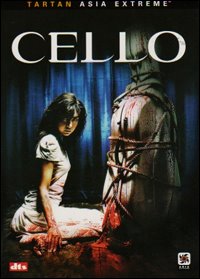
Cello, the horror movie

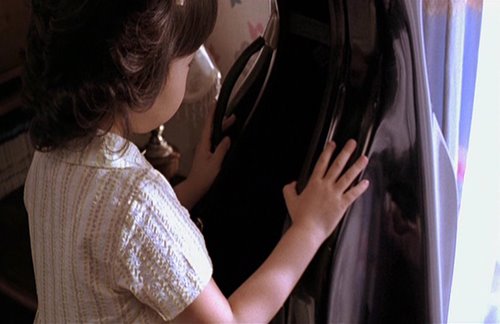
Sometimes just trying to play the cello, whether as an amateur, student, or professional, makes life feel like a horror movie. Well, now there's an actual horror movie (from Korea) available on DVD, bringing those cello-player nightmares to home theatres. It's called, approrpiately, Cello. Here are some stills I found at this review.

Hey, cut those fingernails before coming to your next lesson!


Yes, you'll fit. But be afraid, very afraid.


Sometimes I, too, want to make sure that cello can't get out of the case!

Saturday, September 09, 2006

Making classical music a human experience

In his latest blog post, Greg Sandow comments on some promising outreach developments by the Metropolitan Opera and the New York Philharmonic. He makes a very salient observation:

One caveat, though. Opening the doors -- getting out into the city -- is only the beginning. The biggest change has to be in what classical music institutions actually present. Performances have to feel like living art, or more generally like real human experience, and not like religious rites or some kind of gushy romance novel, where the content doesn't get much beyond "isn't it beautiful!"
Perfectly put--no wonder Greg's a professional writer. As I discussed in my post reflecting on my experience at a lieder recital, there will always be room for quasi-religious performances, especially for those whom classical music fulfills the role that for others is taken by formal religion.

"Real human experience" means, among other things, being able to respond and express and move; to be a participant and not just an observer. And it is interesting that many forward-thinking religious people--I'm thinking especially of Matthew Fox--are saying the same thing about worship experiences.

Just as some in classical music are saying we need to incorporate elements of other genres (pop, rock, non-Western music, jazz, etc.) and embrace new technologies, so does Fox's "creation spirituality" movement.

Mom was right

I once asked my mother, who recently retired as the piano professor at the University of Tampa, what the most important quality is for a successful musician. At the time, I was surprised by her answer: "the desire to play well."

But I came to see she was right. It is the desire to play well that fuels the commitment necessary to do everything else: all the hours of practicing, the lessons, the expense of instruments, etc. This comes to mind because I am playing the Shostakovich 1st Concerto on September 24, and the amount of hours of patient practice to work out the details are really something. We it not for the desire to play really well, to have as much technical control as I possibly can, I would not be sitting in my office at 10:15 PM on a Saturday night finally winding down.

Hours and hours over the course of weeks on a few particularly difficult passages. And the challenge is not to practice "hard" but to practice with calm and comfort and intelligence. After a while, the motions become automatic, and playing the once-difficult passages can become calming and centering.

Bernard Greenhouse used to tell me when I was his student that "any technical problem can be solved." He was (and is) right. But it takes time and thought and patience. He also pointed out that it just takes many, many hours of practice. Another of my teachers (sorry for all the name dropping), Leonard Rose, was famous for his commitment to regular practice throughout his career. And whatever problem I mentioned to him, his answer was always to practice more!

I started learning the Shostakovich in the late spring and have worked on it on and off since then. Now, of course, it is much more "on" than "off"! Passages that initally seemed impossible are now actually easy. I am feeling more and more confident and calm.

Why am I going on about this? Besides the fact that it is on my mind, it illustrates something important. While I have always been naturally musical and imaginative and expressive. Maybe that sounds egotistical, but those just happen to be my gifts. But cello technique? No gift there. I think I have virtually no natural talent for actually playing the cello. Every bit of technique has been worked out and developed. I have been smart enough to listen to my teachers and observe good players and learn from them.

And most of all, I have had the desire to play well that has brought me back to the cello every time I tried to quit, that drove me to study and practice and learn, and that gives me the patience to sit for hours and hours and hours.

Mom, as is so often the case, is right.

Thursday, September 07, 2006

After Die schöne Müllerin

Last night my DePauw faculty colleagues Keith Tonne (tenor) and Amanda Hopson (piano) did a wonderful performance of the complete Die schöne Müllerin cycle by Schubert. They even had the poems Schubert didn't use in the cycle (as I understand it, programs had run out by the time I arrived) read aloud between several of the songs.

It was a beautiful performance, exceedingly well-prepared. A large audience, much larger than the usual faculty recital audience (hmm, maybe things are picking up?--well, we'll see how things are 40 recitals from now), if a bit smaller than at my alternative concert a week before. The audience was quiet and respectful, and when I looked around the hall everyone seemed quite attentive. It was the a traditional concert environment at its best, and I enjoyed the concert very much.

It's the kind of concert that can be done in academia, where there's no extra fee paid to the faculty performers and where no tickets need to be sold. And academia is one of the places where it's entirely appropriate to do formal recitals with a reverently quiet audience. As I reflected on that, other thoughts came to mind as well:

  • This works in academia and in a few major cities, but I don't think leider recitals are doing well anywhere else.
  • Would applause between some of the songs, especially after the lighter ones, have absolutely ruined the possibility for a deep artisitic experience?
  • It was the end of a very long day and I'd had a large dinner. If I'd been able to clap once in a while, to express myself in some physical way, would I expereinced less occasional sleepiness and mind wandering. In other words, with some breaks in concentration, would my concentration during the music have been more focused?
  • It takes an audience well-versed in classical music to provide the kind of respectful, attentive, quiet envionment which was so enjoyable last night (and that's one of the great things about academia--where outside of a college or university in central Indiana would one find such an audience for lieder?).
  • Even if we accept that this is the ideal format in which to experience a perfromance of something likeDie schöne Müllerin , this is not the format to bring in a new audience, an audience that once involved in classical music through a more participatory experience might then be ready and interested in experiencing a more "serious" concert environment.
And I'm still thinking!

Tuesday, September 05, 2006

Now you can see a bit of the concert , , ,

Ah, publicity. Ken Owen, the director of media relations at DePauw, read this blog and decided to write a story for the DePauw website about the classical-music-in-jeans concert. (If you are visiting this blog for the first time, following the link from the article, welcome.)

The story even has a video clip. And comments from audience members can be found at the first post-concert post. The clip shows the first episode of dancing at the concert. As some of the comments indicate, the dancing and the laughter perhaps had more to do with the transgressive spirit of the event than just allowing one's self to music. And I've since realized that the concert was also a piece of theatre, an event about smashing rules, and in that it connected deeply with the energy of college students making the transition from feeling constrained and repressed by the rules of the adult world to being part of adult culture themselves.

The news story has already resulted in one comment, on yesterdays' post, from a DePauw alum. When we talk about the "crisis in classical music," there are some who will point to the new concert halls being built (as described in Sunday's New York Times article) as evidence that some of us are wringing hands needlessly. Those new halls, and the big jump in ticket sales for the Nashville Symphony, for example (described in the article), are great news, indeed. Not all the news is bad.

Classical music isn't "dying." There will always be people who love listening to art music and who love playing it so much that they devote their lives to it. But as far as I can tell, there is indeed a genuine crisis when it comes to classical music being a central part of American cultural life. And from within the music education and music-performance worlds, there's a crisis in terms of having audiences for all the extraordinary classical musicians being trained. My reader, a graduate student at another university, wrote this in her comment on yesterday's post:

I saw your article on the DPU website and followed it here. I am at Notre Dame now, and see the same thing you see at DePauw, where people just won't come to concerts [emphasis added]. The orchestra here is pretty good (we played at Carnegie Hall in March), but we can't even get people to come to the concerts when we GIVE away tickets! The Glee Club (singers) have no problem, but the orchestra....we're lucky if the auditorium is 20% full at most.
The current situation is not the end of the world. It's a time of transition. It's a time for creative thinking and diversity in presentation and marketing, and for reexamining our assumptions of what defines a classical performance. There are great opportunities for composers and performers to do something new and different.

So experiment away.

Sunday, September 03, 2006

Looking ahead . . . next time plugged

I just came home from a wonderful afternoon and evening outdoor jazz festival, right here in Greencastle.

I found myself thinking about what Cleveland Johnson (the Interim Dean of the DePauw School of Music) mentioned in his comment on the classical-music-in-jeans concert post. He said he found himself wanting to hear the music amplified--something he would never before have imagined himself wanting at a classical concert.

At the jazz festival, there was certainly much more talking and laughing than at my concert. And there was dancing. And there were even kids energetically playing basketball, just a few yards away from the stage. People were walking around, including some selling raffle tickets and desserts. Chairs were constantly being set up or taken down. Blankets were laid out and picked up. People waved to each other, moved to be with each other, embraced. They ate and drank.

But we could still hear every note being played or sung, because it was all amplified. (Quite well, too.) There was much, much more audience-generated sound and movement at the jazz festival than at the no-etiquette-rules recital I did the other night. But with the performers amplified, music was never obscured by the other sounds. The dancing and basketball playing wasn't right in front of the performers, but to the side and a bit behind the stage, so it wasn't visually distracting.

Traditional concert halls are designed for traditional concerts. I'll do my next informal, interactive classical concert in a different sort of setting, and be amplified, too.

But it occurred to me while I was hanging out at the jazz festival that there was powerful symbolism, at least on the personal level, in using an official faculty recital in a university concert hall (where we used to have a list of 10 commandments for audience behavior, all stated as "thou shalt not . . .") to smash the tradition, generate some debate, and start myself on a new adventure. The more I think about it, the more I like it.